
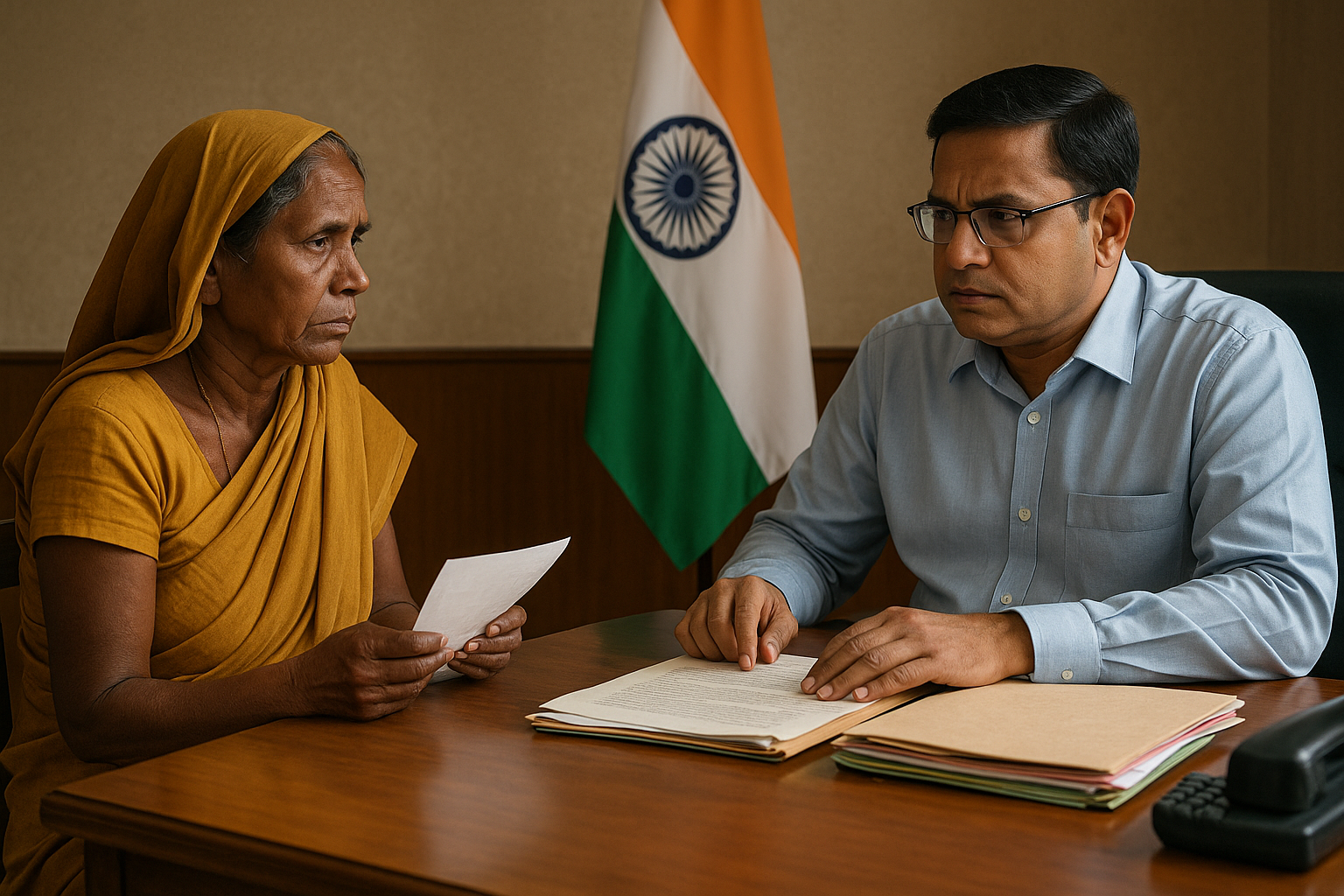
The Patna High Court has dismissed a writ petition challenging the rejection of a compassionate appointment claim made by the son of a deceased state employee. The matter arose after the death in harness of an Inspector serving with Bihar Military Police-11, Jamui. The petitioner sought appointment on compassionate grounds, but the authorities rejected the request citing a State circular that bars such appointments where any dependent is already “gainfully employed.” The Court, speaking through Hon’ble Mr. Justice Harish Kumar on 03 March 2025, upheld that rejection and dismissed the petition.
Simplified Explanation of the Judgment
This case was about whether a family member of a government employee who dies while in service (dies “in harness”) can get a government job under the policy of compassionate appointment when another dependent in the same family already has a job. The petitioner’s father, an Inspector in Bihar Military Police-11, passed away on 11 September 2017. After this unfortunate event, the petitioner applied for a compassionate appointment. During the application process, he disclosed that his elder brother worked in the Indian Railways as a Group-D/Group-IV employee. The Commandant of BMP-11, Jamui rejected the request through Memo No. 1625 dated 30.07.2018, and a later representation filed by the petitioner’s mother was also turned down by Memo No. 2372 dated 14.10.2018.
The petitioner argued that the elder brother had been living separately since 2002 and placed certificates from Panchayat authorities to show this separation. The basic thrust of the argument was: since the earning brother lives separately, the remaining family should still be considered in financial distress, and the petitioner should therefore be eligible for compassionate appointment.
The State opposed this, relying on a Government clarification dated 19.11.2014 issued by the General Administration Department (GAD). According to this clarification, if any dependent of the deceased government servant is “gainfully employed,” no other dependent is eligible for compassionate appointment. In other words, the mere fact that one dependent has a job is enough to disqualify the claim, irrespective of whether that employed dependent lives with the family or apart from them.
The Court examined the rival contentions and noted that a Full Bench of the Patna High Court had already settled this issue in the case of Niraj Kumar Mallick v. State of Bihar & Ors., reported in 2018 (2) PLJR 951. The Full Bench had interpreted the 19.11.2014 clarification and held that when any dependent is “gainfully employed,” other dependents cannot claim compassionate appointment. The Full Bench also made clear that “gainfully employed” must be judged objectively—based on the capacity of the employed dependent’s job to provide sustenance—rather than subjectively—based on whether that dependent is actually supporting the family, willing to support them, or living with them. The separation of an employed sibling does not create eligibility for compassionate appointment. These are policy limits that the writ court will not relax on sympathetic considerations.
Applying the Full Bench ruling to the present case, the Court observed that (i) the petitioner himself had disclosed his brother’s employment in the Railways; (ii) there was no pleading that this employed dependent lacked the capacity to provide sustenance to the rest of the family—the only exception recognized by the Full Bench; and (iii) arguments about separation, unwillingness to support, or actual support are legally irrelevant under the policy as clarified and as interpreted by the Full Bench. Therefore, once a dependent is “gainfully employed,” the law does not permit compassionate appointment to another dependent. On that basis, the Court held that the authorities rightly rejected the petitioner’s claim and dismissed the writ petition as devoid of merit.
In plainer terms: The policy’s goal is to provide immediate financial relief to a family suddenly left without a breadwinner. But if any dependent already has a job that can sustain the family, the law assumes that the family’s immediate financial need is addressed. Whether that employed person lives separately or declines to help is not something the appointing authority or the Court will investigate in a compassionate appointment case. Only if it is shown objectively that the employed dependent cannot provide sustenance would the door remain open. Because no such case was made here, the petition failed.
Significance or Implication of the Judgment (For general public or government)
For families of government employees in Bihar, this decision reinforces a clear and strict understanding of the compassionate appointment scheme. It is not a general right to public employment, nor a substitute for regular recruitment; it is a narrowly tailored welfare measure meant to avert immediate destitution. If any dependent is already in a job where they can sustain the family, other dependents cannot invoke compassionate appointment—even if relationships within the family are strained, or the employed person lives separately. The Court’s approach avoids subjective family inquiries and keeps the process consistent and speedy.
For government departments, the judgment affirms that the 19.11.2014 GAD clarification is legally sound and must be applied objectively. Authorities need not (and should not) examine subjective factors like family separation, personal willingness to support, or intra-family disputes. Their task is only to see: (i) is any dependent gainfully employed? and (ii) if yes, has the petitioner shown that this employment cannot, in objective terms, provide sustenance to the remaining dependents? If the answer to the second is no, the claim can be rejected. This protects administrative efficiency and ensures uniform application across districts and cadres.
Legal Issue(s) Decided and the Court’s Decision with reasoning
- Whether a dependent can claim compassionate appointment when another dependent is already “gainfully employed.” Decision: No. The Full Bench ruling in Niraj Kumar Mallick governs; if any dependent is gainfully employed, other dependents are not eligible for compassionate appointment.
- Whether separation of the employed dependent or their alleged unwillingness to support the family is relevant. Decision: No. These subjective factors are beyond the scope of inquiry. The test is objective—whether the employed dependent’s job can provide sustenance.
- Whether the petitioner showed that the employed dependent could not provide sustenance. Decision: No. There was no pleading to this effect, so the exception did not apply.
- Whether the rejection orders (30.07.2018 and 14.10.2018) were illegal. Decision: No. The orders aligned with the 19.11.2014 GAD clarification and binding Full Bench precedent. Writ petition dismissed.
Judgments Relied Upon or Cited by Court
- Niraj Kumar Mallick v. State of Bihar & Ors., 2018 (2) PLJR 951 (Full Bench) — Clarifies that the existence of any “gainfully employed” dependent bars compassionate appointment for others; “gainfully employed” assessed objectively, not subjectively.
- Umesh Kumar Nagpal v. State of Haryana, (1994) 4 SCC 138 — Supreme Court authority often cited to underline that compassionate appointment is not a source of recruitment but a narrowly confined exception (referred within the Full Bench extract).
- Asha Ramchandra Ambedkar v. Union of India, (specific citation referred in Full Bench discussion) — Cited for the principle that courts cannot ignore statutory/policy provisions on sympathetic grounds.
- Vishal Kumar (Division Bench of Patna High Court) — Referred in the Full Bench extract as supportive of the GAD clarification’s approach.
Case Title
Tek Narayan Paswan v. State of Bihar & Ors.
Case Number
Civil Writ Jurisdiction Case No. 2617 of 2019.
Citation(s)
2025 (2) PLJR 218
Coram and Names of Judges
Hon’ble Mr. Justice Harish Kumar (Oral Judgment dated 03.03.2025).
Names of Advocates and who they appeared for
- For the petitioner: Mr. Ebrahim Kabir, Advocate; Smt. Shruti Sinha, Advocate.
- For the respondents (State): Mr. Shailesh Kumar, AC to GP-5.
Link to Judgment
MTUjMjYxNyMyMDE5IzEjTg==-wSTO8yQ48n4=
If you found this explanation helpful and wish to stay informed about how legal developments may affect your rights in Bihar, you may consider following Samvida Law Associates for more updates.







