
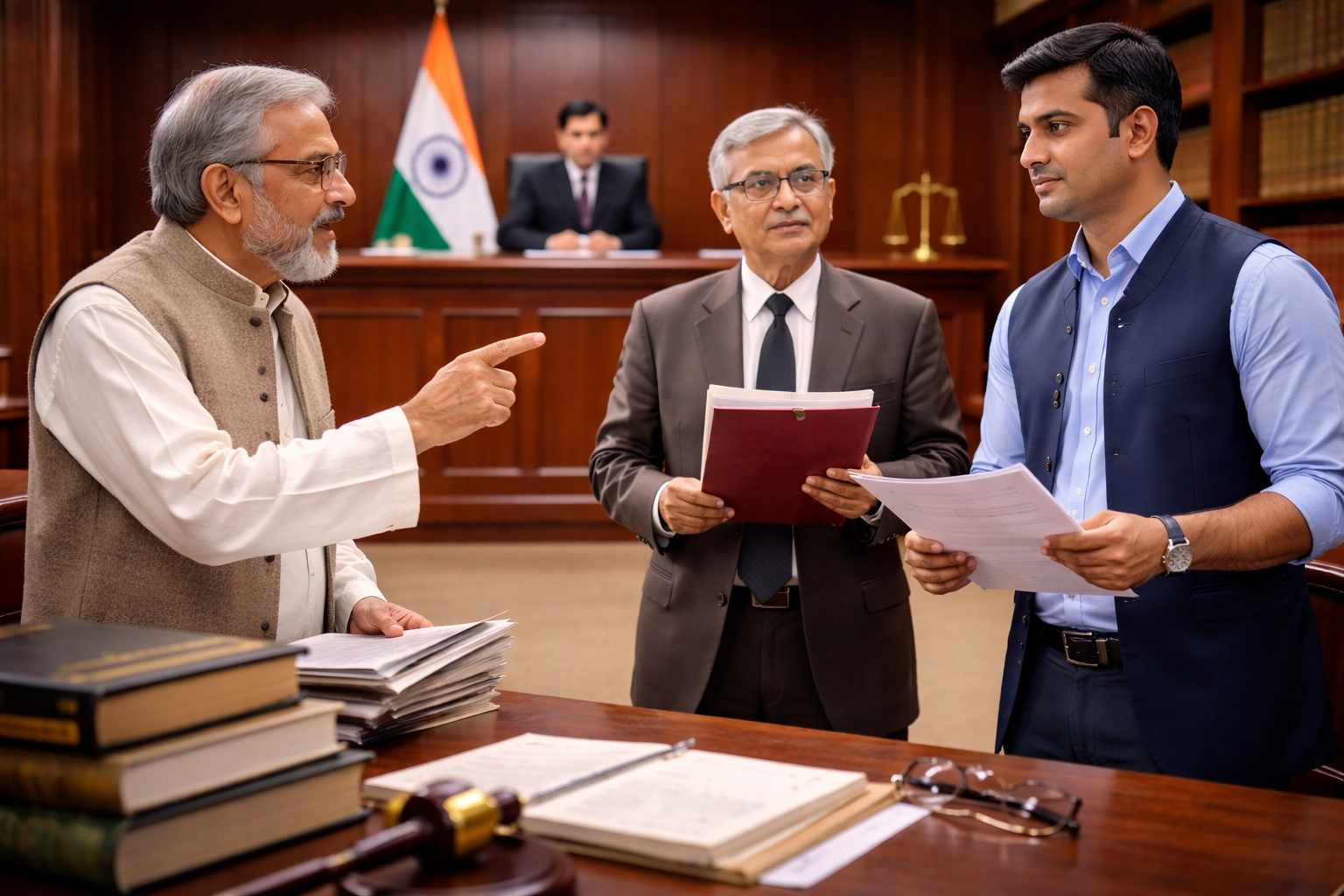
Simplified Explanation of the Judgment
This judgment of the Patna High Court clarifies an important issue concerning the powers of a University over private aided affiliated colleges, especially regarding the appointment of a Principal In-Charge when disputes arise within the college management. The Court examined whether the University acted within its authority in appointing a senior teacher as Principal In-Charge of a Sanskrit college, despite objections raised by another teacher who was already holding charge.
The case arose from a dispute in a private aided Sanskrit college in Gopalganj district, affiliated to Kameshwar Singh Darbhanga Sanskrit University. The petitioner was working as a teacher and had been handed over charge as Principal In-Charge when the regular Principal proceeded on medical leave in November 2017. According to the petitioner, since he was already holding charge, there was no justification for the University to issue a fresh order in June 2019 appointing another teacher (respondent) as Principal In-Charge.
The University, however, passed an order dated 20 June 2019, appointing a senior-most teacher as Principal In-Charge and directing him to take steps for constitution of the Governing Body of the college. This order was challenged before the Patna High Court.
Background of the Dispute
The petitioner claimed that:
- He was lawfully handed over charge of Principal when the earlier Principal went on medical leave.
- The Governing Body of the college had recommended his name for appointment as Principal In-Charge.
- The University had no authority to appoint a Principal In-Charge in a private aided affiliated college, as governance of such colleges lies with the Governing Body.
- The order appointing the respondent teacher was arbitrary and intended to enable the University to control the formation of the Governing Body.
The petitioner also alleged that the respondent teacher was ineligible to hold the post of Principal as he allegedly did not possess the required qualifications.
Stand of the University and the Respondent
The University and the respondent teacher opposed the writ petition and contended that:
- The respondent teacher was senior to the petitioner, having been appointed decades earlier through the competent commission.
- The petitioner was comparatively junior, having been appointed much later.
- There was no valid Governing Body in existence after 2018, which necessitated intervention by the University.
- As per the statutory provisions, in the absence of a Principal, the senior-most teacher should be nominated as Principal In-Charge.
- The University has overall supervisory control over affiliated colleges and is empowered to issue directions to ensure proper administration.
Statutory Provisions Considered by the Court
The Patna High Court examined several provisions of the Bihar Universities Act and the Statutes framed thereunder, including:
- Provisions casting a duty on the Governing Body to comply with orders and directions of the University.
- Statutory clauses empowering the Syndicate to resolve difficulties in the formation or functioning of a Governing Body.
- Provisions stating that when the Principal of an affiliated college is absent, the senior-most teacher should be nominated to take charge.
- The overarching role of the University in appointing a regular Principal through proper selection, indicating its authority in matters concerning interim arrangements as well.
Findings of the Patna High Court
After considering the submissions and statutory framework, the High Court recorded the following key findings:
- A private aided affiliated college does not function independently of the University; it is subject to statutory supervision and control.
- The Governing Body and its office-bearers are under a legal obligation to follow University directions.
- When there is no effective Governing Body or when disputes arise, the University is competent to step in to ensure proper administration.
- Since the appointment of a regular Principal is made by the University, the appointment of a Principal In-Charge on an ad hoc basis by the University cannot be said to be illegal.
- The respondent teacher was senior, duly qualified, and had long experience, whereas the petitioner was much junior.
- Allegations of collusion between the respondent and the University were found to be baseless and unsubstantiated.
The Court also clarified that questions relating to the validity of the petitioner’s original appointment or compliance with UGC Regulations were not under consideration in this case and were therefore left open.
Final Decision of the Court
The Patna High Court held that:
- The University’s order dated 20 June 2019 appointing the respondent as Principal In-Charge was legal and justified.
- The respondent teacher was rightly allowed to continue as Principal In-Charge and to take steps in accordance with law.
- The interim stay granted earlier was vacated.
- The writ petition was dismissed, with no order as to costs.
Significance or Implication of the Judgment
This judgment has practical importance for private aided and affiliated colleges in Bihar:
- It reaffirms the supervisory and regulatory authority of Universities over affiliated institutions.
- It clarifies that colleges cannot bypass University control by citing internal Governing Body resolutions, especially when statutory requirements are not fulfilled.
- It underscores that seniority and statutory provisions prevail over ad hoc or backdoor arrangements.
- It strengthens administrative discipline in educational institutions receiving public aid.
For the general public and academic institutions, the decision ensures that administrative continuity and legality are maintained in colleges, preventing internal disputes from paralysing governance.
Legal Issue(s) Decided and the Court’s Decision
- Whether the University can appoint a Principal In-Charge of a private aided affiliated college?
➤ Yes. The University has the power to appoint an ad hoc Principal In-Charge under the statutory scheme. - Whether the petitioner had a vested right to continue as Principal In-Charge?
➤ No. Being junior, the petitioner could not claim the post against a senior teacher. - Whether the University’s order was arbitrary or without jurisdiction?
➤ No. The order was found to be lawful and justified.
Judgments Referred by Parties (with citations)
- Braj Kishore Singh v. State of Bihar & Others, 1997 (1) PLJR 509 (Full Bench)
Judgments Relied Upon or Cited by Court (with citations)
- Principles under the Bihar Universities Act and relevant Statutes governing affiliated colleges.
Case Title
Teacher (Petitioner) v. Chancellor of Universities & Others
Case Number
Civil Writ Jurisdiction Case No. 24241 of 2019
Citation(s)
2023 (1) PLJR 573
Coram and Names of Judges
Hon’ble Mr. Justice Sanjeev Prakash Sharma
Names of Advocates and who they appeared for
- For the Petitioner: Mr. Ashok Kumar Choudhary, Advocate; Ms. Sushmita Kumari, Advocate
- For the University Authorities: Mr. Deepak Kumar, Advocate
- For the Respondent Teacher: Mr. Sanjeev Kumar Jha, Advocate
Link to Judgment
MTUjMjQyNDEjMjAxOSMxI04=-d–am1–PHeZ4m6ew=
If you found this explanation helpful and wish to stay informed about how legal developments may affect your rights in Bihar, you may consider following Samvida Law Associates for more updates.







