
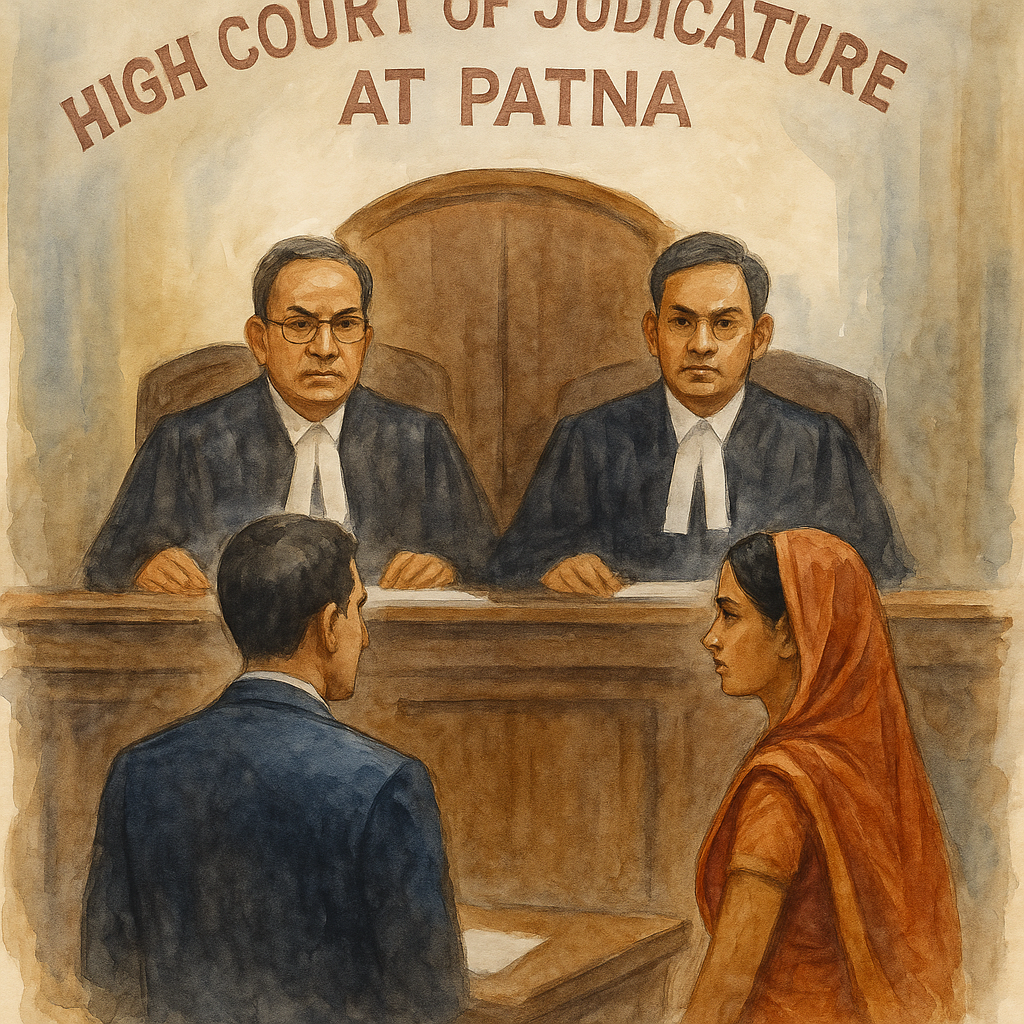
The Patna High Court has disposed of a writ petition filed by a construction firm challenging its debarment from future government tenders. The Court found that the petitioner had already completed the work in question and had been removed from the debarred list, making the matter infructuous.
Simplified Explanation of the Judgment
In this case, the petitioner, a private construction company, approached the Patna High Court against an order dated 23 June 2017 by the Executive Engineer, Road Construction Department, Muzaffarpur-1. The order had debarred the company from participating in any future tenders. The petitioner argued that the debarment was unjustified, arbitrary, and in direct violation of a previous High Court order in CWJC No. 6293 of 2016, which had quashed an earlier debarment order issued under similar circumstances.
According to the petitioner, multiple factors contributed to the delay in completing the road construction project, including:
- Delayed shifting of high-tension electricity poles and underground telecom cables.
- Naxalite threats in the project area.
- Seizure of machinery by telecom companies due to alleged damage.
- Antisocial elements creating obstructions at the worksite.
- Lack of protection from local authorities despite several requests.
The petitioner contended that these issues were beyond its control and were well documented in official communications, including a letter from the respondent department to the local administration requesting police protection.
Furthermore, the petitioner stated that over 85% of the work had been completed under extremely challenging conditions and that any delay should not have been treated as deliberate. The debarment, according to the petitioner, violated principles of natural justice, as no proper hearing was granted and representations were ignored.
The petitioner also emphasized that under Clause 5.2 of the Standard Bidding Document (SBD), delays caused by pre-existing site conditions or government lapses should not be held against the contractor.
However, by the time the petition was heard on 26 April 2023, circumstances had changed significantly. The construction firm had completed the assigned work, and its name had been removed from the debarred list. Given these developments, the High Court found no reason to entertain the petition further.
The Court observed that if any payment or claim was still pending, the petitioner was free to pursue the matter with the appropriate government authority.
Significance or Implication of the Judgment
This judgment reaffirms that judicial intervention may become unnecessary when the grievance no longer exists. In contractual disputes with government departments, especially involving blacklisting or debarment, it is crucial for contractors to seek timely relief. However, once the adverse consequences are resolved—either through completion of work or administrative correction—the need for court adjudication may not arise.
For government authorities, the case serves as a reminder to ensure that disciplinary actions like debarment are proportionate, justified, and in compliance with judicial precedents and contractual norms. The judgment also highlights the responsibility of the state to provide safe and obstruction-free work environments in public infrastructure projects.
Legal Issue(s) Decided and the Court’s Decision with Reasoning
- Issue: Whether the debarment order issued on 23 June 2017 was valid and justified.
- Court’s Decision: The Court did not decide on merits as the issue became moot.
- Issue: Should the High Court entertain the petition after the petitioner was removed from the debarred list and the project was completed?
- Court’s Decision: No, the reliefs sought did not survive for consideration.
- Reasoning:
- The petitioner had completed the contracted work.
- The name was removed from the debarred list.
- No ongoing prejudice existed that required judicial interference.
- Any remaining claims could be addressed administratively.
Judgments Referred by Parties
- CWJC No. 6293 of 2016 (not detailed but cited as precedent by petitioner)
Case Title
M/s Alectra Construction Ltd. v. The State of Bihar & Ors.
Case Number
Civil Writ Jurisdiction Case No. 11375 of 2017
Coram and Names of Judges
Hon’ble Mr. Justice P. B. Bajanthri
Hon’ble Mr. Justice Arun Kumar Jha
Names of Advocates and Who They Appeared For
For the Petitioner: Kumari Rashmi, Advocate; Mr. Suresh Pd. Singh No. 1, Advocate
For the State: Mr. Swapnil Kumar Singh, AC to GP 19
Link to Judgment
If you found this explanation helpful and wish to stay informed about how legal developments may affect your rights in Bihar, you may consider following Samvida Law Associates for more updates.







