
Case Background
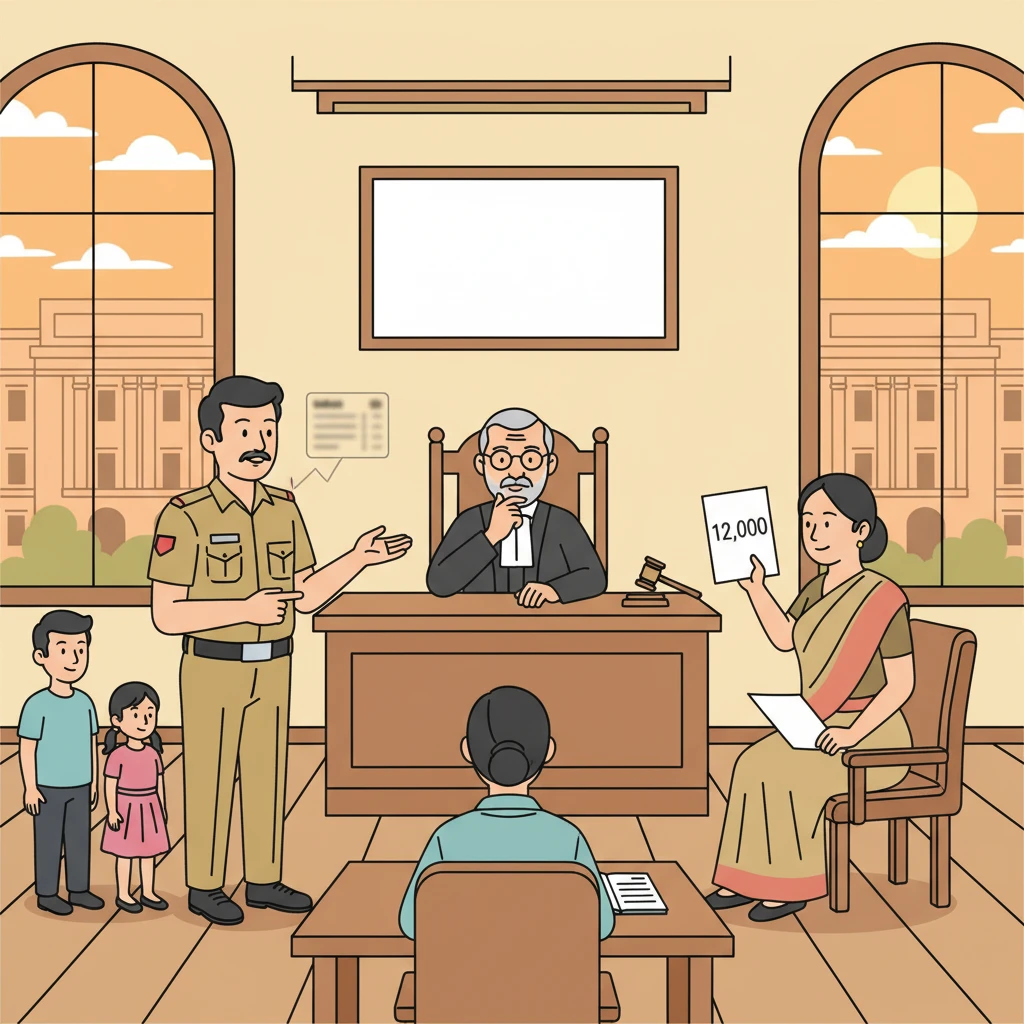
This case arises out of a marital dispute where the wife filed a maintenance case against her husband under Section 125 of the Code of Criminal Procedure.
The proceeding was registered as Maintenance Case No. 52/2022 before the Principal Judge, Family Court, Gaya. The wife (opposite party no. 2) sought monthly maintenance from the husband (the petitioner).
On 08.08.2022, the Principal Judge, Family Court, Gaya passed an order directing the husband to pay Rs. 12,000 per month to his wife. The amount was to be paid on or before the 15th day of each month. The order also stated that this payment would be subject to adjustment of any interim maintenance already paid to her.
Feeling aggrieved, the husband approached the Patna High Court by filing Criminal Revision No. 800 of 2022. He asked the High Court to interfere with and set aside the maintenance order passed by the Family Court.
What the Court Examined and Decided
The criminal revision came up before the Patna High Court, presided over by Hon’ble Mr. Justice Arun Kumar Jha, and was decided by an oral judgment dated 19.08.2025. The Court heard the learned counsel for the petitioner at the admission stage itself and proceeded to decide the matter finally.
The central grievance of the husband was not about the fact of maintenance itself, but about the amount of Rs. 12,000 per month fixed by the Family Court. His sole ground for challenging the order was that the Family Court had not properly considered his financial liabilities.
From the judgment, it is clear that the husband is employed as a constable in the Railway Protection Force (RPF). His counsel argued before the High Court that the petitioner had several financial responsibilities besides his wife.
The husband claimed that he had to take care of:
- Two brothers, and
- A daughter of his deceased sister.
He also submitted that he had taken a loan and had to pay installments, which further reduced his disposable income.
To assess the correctness of these submissions, the Patna High Court carefully examined the record of the case and, in particular, the impugned order of the Principal Judge, Family Court, Gaya.
The High Court noted that the Family Court had already considered the salary slip filed by the petitioner. This salary slip showed that after all deductions, the take-home salary of the petitioner was about Rs. 41,000 per month.
On this basis, the Patna High Court recorded an important finding: a husband is supposed to first take care of his wife. In other words, the legal obligation to maintain one’s wife has priority over financial obligations towards other relatives.
The Court then examined the specific relatives the husband had referred to. It held that the brothers of the petitioner cannot be treated as his dependents in law. Therefore, whatever moral or personal sense of responsibility he might feel towards them could not override his statutory duty to maintain his wife.
Regarding the daughter of his deceased sister, the Court observed that taking care of her may indeed be a pious obligation. It acknowledged that this could be a noble and moral responsibility. However, the Court clearly stated that such care is not a statutory obligation on the part of the petitioner.
This distinction between moral obligations and legal obligations became central to the Court’s reasoning. Under Section 125 CrPC, the responsibility to maintain a wife is a clear statutory obligation. On the other hand, supporting adult siblings or a niece is not legally mandated in the same manner.
The Court further observed that it was not apparent from the impugned order that the Family Court had ignored the submissions of the petitioner about his liabilities. In fact, the Family Court had considered his salary slip, looked into his net salary after deductions, and then fixed maintenance at Rs. 12,000 per month.
This amount, when seen against a net salary of about Rs. 41,000 per month, did not appear unreasonable to the High Court.
The High Court then addressed the core revision question: whether there was any illegality, impropriety, or infirmity in the impugned order that could justify interference in a criminal revision.
After examining the material and the reasoning of the trial court, the Patna High Court concluded that there was no such illegality or impropriety. The trial court had considered relevant facts—especially the petitioner’s income—and had exercised its discretion in fixing a reasonable maintenance amount.
Since no perversity or serious error in the Family Court’s exercise of discretion was shown, the High Court held that there was no ground to interfere with the order.
On this basis, the Court dismissed the criminal revision petition. It clearly recorded that it found no merit in the petition. As a result, the order of the Principal Judge, Family Court, Gaya dated 08.08.2022 in Maintenance Case No. 52/2022 remains valid and enforceable.
In practical terms, this means that the husband must continue to pay Rs. 12,000 per month to his wife, on or before the 15th of each month, subject to adjustment of any interim maintenance already paid earlier.
Why This Judgment Matters
This judgment of the Patna High Court reinforces a simple but important principle: a husband’s first legal duty is to maintain his wife. Other financial responsibilities, especially towards non-dependent relatives, cannot be used as an excuse to reduce or avoid this obligation.
For spouses seeking maintenance under Section 125 CrPC, the decision shows that courts will look closely at the paying spouse’s actual income. If the income is sufficient, courts can order a reasonable portion towards maintenance, even if the payer claims other family liabilities.
For husbands in similar situations, the case clarifies that helping brothers or nieces, though morally good, does not dilute the legal duty toward one’s wife. The law gives clear priority to the wife’s right to maintenance over voluntary support to other relatives.
More broadly, this judgment signals that in revision jurisdiction, the Patna High Court will not lightly interfere with maintenance orders of Family Courts where those orders are based on salary records and show reasonable application of mind.
Legal Issues and Answers
- Issue: Whether the maintenance order directing the husband to pay Rs. 12,000 per month to his wife, despite his claimed liabilities towards brothers, niece and loan repayments, was illegal or improper.
Answer: No. The Patna High Court held that the husband’s primary obligation is to maintain his wife, that brothers are not his dependents, and supporting a deceased sister’s daughter is only a pious, not statutory, obligation. Finding no illegality, impropriety or infirmity in the Family Court’s order, the Court dismissed the revision.
Cases Cited by the Court
- No prior judgments or case law have been cited or relied upon in the text of this judgment.
Case Details
Case Number: Criminal Revision No. 800 of 2022 (arising out of Maintenance Case No. 52/2022; PS Case particulars not detailed beyond “Year-0 Thana- District- Gaya”)
Case Title: Chandan Paswan v. The State of Bihar & Anr.
Coram: Hon’ble Mr. Justice Arun Kumar Jha
Citation: 2025(3) PLJR 946
Advocates:
For the Petitioner: Mr. Sujit Kumar, Advocate; Mr. Abhijit Gautam, Advocate
For the Respondents: Not specified in the judgment
Nature of the Case: Criminal revision against an order of the Principal Judge, Family Court, Gaya granting maintenance under Section 125 of the Code of Criminal Procedure.
Date of High Court Judgment: 19.08.2025
Impugned Order: Order dated 08.08.2022 passed by the Principal Judge, Family Court, Gaya in Maintenance Case No. 52/2022 under Section 125 CrPC.
Link to Judgment: Click here to view the official Patna High Court judgment
If you found this explanation helpful and wish to stay informed about
how legal developments may affect your rights in Bihar,
you may consider following Samvida Law Associates for more updates.







