
Simplified Explanation of the Judgment
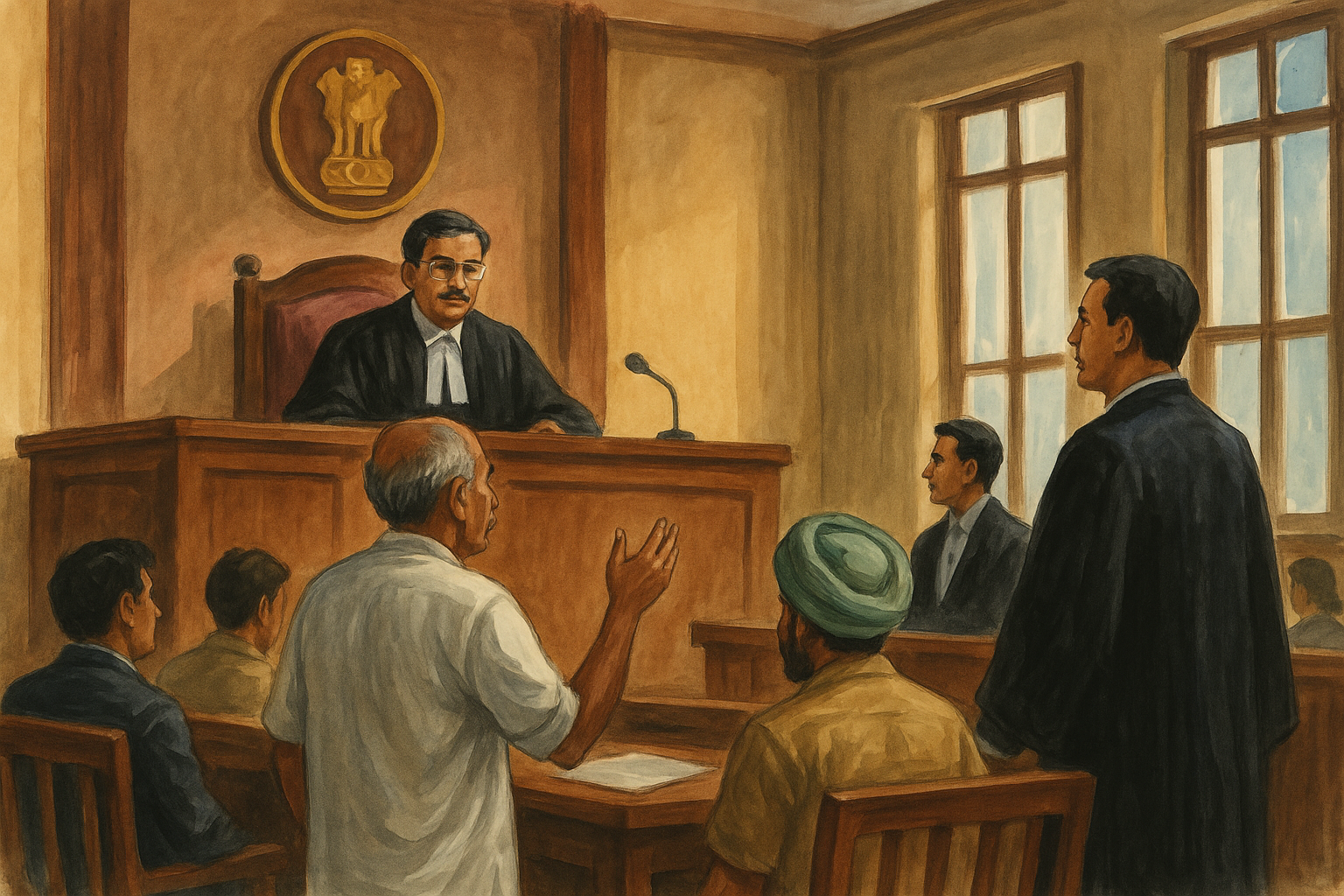
The Patna High Court, in its oral judgment dated 16 August 2022, delivered by Hon’ble Mr. Justice Mohit Kumar Shah, dismissed a writ petition filed by a claimant seeking Swatantra Sainik Samman (SSS) Pension—a pension scheme launched by the Central Government to honour freedom fighters who suffered imprisonment or other hardships during India’s independence movement.
The petitioner claimed to have participated in the Quit India Movement of 1942, alleging that he was imprisoned from 2 October 1942 to 2 April 1943 for his involvement. He filed his initial application for pension in 1981 before the Bihar Home Department, but his claim was rejected in 1986 and again in 2014. Dissatisfied, he approached the High Court in 2018, nearly 32 years after the first rejection.
The petitioner’s case was that he had indeed been in jail during the freedom movement, and the government had arbitrarily denied him the Samman Pension despite his genuine participation.
However, the Union of India and the State of Bihar strongly opposed the claim. They argued that not every person who took part in the freedom movement automatically qualifies for the SSS Pension—eligibility depends strictly on the conditions and documentary proof prescribed under the Swatantra Sainik Samman Pension Scheme, 1980.
Government’s Eligibility Rules under the SSS Pension Scheme
The Central Government clarified that the scheme grants pension only to those who can prove actual suffering in one of the following forms:
- Minimum six months’ imprisonment in a mainland jail before independence (three months for women or SC/ST freedom fighters).
- Remaining underground for six months or more under specific conditions such as being a proclaimed offender, carrying an arrest warrant, or having an order of detention issued but not served.
- Internment or externment from a district for six months or more.
- Confiscation or sale of property by the authorities due to participation in the freedom movement.
- Permanent incapacitation due to firing or lathi charge.
- Loss of government job due to participation in the independence struggle.
- Punishment of caning or flogging.
To support any such claim, the applicant must submit proper official proof, such as jail certificates, court orders, or, where unavailable, a Non-Availability of Record Certificate (NARC) along with Co-Prisoner Certificates (CPCs) issued by other verified freedom fighters who shared jail time with the applicant.
The Court’s Examination of the Evidence
In this case, the petitioner submitted two Co-Prisoner Certificates:
- One from Param Gound, who himself had served less than one year in jail.
- Another from Ram Krishna, who did not specify the exact period during which both had been imprisoned together.
The High Court found that these certificates did not meet the mandatory criteria of the SSS Pension Scheme, which requires each certifier to have a proven imprisonment of at least one year and to confirm that they were incarcerated with the claimant for at least six months.
Additionally, serious discrepancies emerged regarding the petitioner’s age.
- In his affidavit dated 31 August 1992, he claimed to be 56 years old—indicating his birth year as 1936.
- Yet he claimed to have been imprisoned in 1942, meaning he would have been only 6 years old during the movement.
- His voter ID card filed in the case showed him as 60 years old in 2004, indicating birth in 1944, making imprisonment in 1942 impossible.
To verify the truth, the State Government constituted a Medical Board in 2013, which estimated the petitioner’s age as between 70 and 80 years, confirming that he would have been around 9 years old in 1942—clearly too young to have been a participant or prisoner in the freedom struggle.
The Court therefore concluded that the petitioner’s claim was false and misleading, amounting to an attempt to fraudulently obtain government pension.
Findings on Delay and Laches
Apart from factual inconsistencies, the Court also noted the extraordinary delay in filing the petition.
The first rejection had occurred in 1986, but the petitioner waited until 2018 to approach the High Court—after more than three decades.
Citing settled principles of law, the Court held that writ petitions suffering from such gross delay and laches cannot be entertained. Legal remedies must be sought within a reasonable time; otherwise, stale claims cannot be revived, particularly when public funds are involved.
Court’s Decision
After carefully reviewing the record, the Patna High Court dismissed the writ petition with strong remarks:
- The petitioner’s documents were inconsistent and insufficient as per the scheme’s requirements.
- There was no record in Mandal Jail, Sasaram confirming that the petitioner had ever been imprisoned there.
- The evidence regarding age proved that the petitioner was too young to have participated in the freedom movement.
- The petition was barred by delay, having been filed 32 years after the rejection.
The Court thus held that the petition was “thoroughly misconceived” and dismissed it in entirety, terming it an attempt to defraud the government.
Significance or Implication of the Judgment
This decision reinforces several crucial legal principles:
- Integrity in Pension Schemes: Government pensions meant for genuine freedom fighters cannot be claimed through false documents or manipulated records. Fraudulent claims not only misuse public money but also insult the sacrifices of real patriots.
- Strict Compliance with Eligibility Rules: The SSS Pension Scheme has detailed evidentiary requirements. Courts will not relax these norms based on sympathy or age—proof of actual suffering is mandatory.
- Doctrine of Delay and Laches: Petitioners must approach the Court within a reasonable period. Reviving claims decades later, especially after official rejections, is not permissible.
- Protection of Public Funds: The judgment affirms that judicial leniency cannot be extended to false or exaggerated claims under government welfare schemes.
- Upholding Administrative Fairness: The ruling reassures honest applicants that due scrutiny is necessary to maintain the sanctity of the freedom fighter pension scheme.
Legal Issue(s) Decided and the Court’s Reasoning
- Whether the petitioner was eligible for the Swatantra Sainik Samman Pension?
- Decision: No. The petitioner failed to produce valid proof of imprisonment or suffering as per the scheme’s requirements.
- Whether contradictory age records undermined the claim?
- Decision: Yes. Based on medical verification, he was only 9 years old in 1942, which made his claim implausible.
- Whether the petition could be entertained after 32 years of delay?
- Decision: No. The Court held the writ petition barred by delay and laches.
- Whether there was any violation of natural justice or procedural unfairness by the authorities?
- Decision: No. The authorities had properly examined the claim and rejected it according to the SSS Pension Scheme.
Judgments Relied Upon or Cited by the Court
- Union of India v. Kameshwar Prasad Singh, AIR 1997 SC 1789 (on delay in pension claims)
- State of Madhya Pradesh v. Nandlal Jaiswal, (1986) 4 SCC 566 (on laches in writ jurisdiction)
- M.P. Rural Road Development Authority v. L.G. Chaudhary Engineers & Contractors, (2012) 3 SCC 495 (on suppression of facts and false claims)
Case Title
Ramjee Sah v. Union of India & Ors.
Case Number
Civil Writ Jurisdiction Case No. 3903 of 2018
Citation(s)
2023 (1) PLJR 58
Coram and Names of Judges
Hon’ble Mr. Justice Mohit Kumar Shah
Names of Advocates and who they appeared for
- For the Petitioner: Mr. Dhaneshwar Prasad Gupta, Advocate
- For the State: Mr. Manish Kumar, GP-4
- For the Union of India: Mr. Manoj Kumar Singh, Central Government Counsel
Link to Judgment
MTUjMzkwMyMyMDE4IzEjTg==-3JFEHMb87BY=
If you found this explanation helpful and wish to stay informed about how legal developments may affect your rights in Bihar, you may consider following Samvida Law Associates for more updates.







