
Simplified Explanation of the Judgment
In this case before the Patna High Court, the petitioner was a private construction company engaged in setting up power substations and related electrical works as a sub-contractor. It worked under two primary contractors who had received work orders from a State power transmission corporation for construction and commissioning of grid substations in Bihar.
The tax department issued a demand-cum-show cause notice to the petitioner on 12 October 2021. The department alleged that during the period from 2016–17 to June 2017, the petitioner had:
- Provided taxable works contract / construction services,
- Failed to obtain proper registration,
- Failed to correctly assess and pay service tax and applicable cesses, and
- Suppressed material facts with intent to evade tax.
Based on data such as Form 26AS and other records, the department computed the petitioner’s service tax liability at about ₹7.41 crore, and also proposed interest and multiple penalties under the Finance Act, 1994 and related provisions.
Proceedings before the Tax Authorities
After the show cause notice, the department repeatedly asked the petitioner to submit documents such as:
- Work orders,
- Agreements,
- VAT returns,
- Proof of service tax payments, and
- Other supporting records.
These requests were made through letters, emails, reminders and even summons. However, according to the adjudication order, the petitioner did not cooperate at the investigation stage and remained unresponsive for a long time.
Later, when the file was transferred to the Audit Commissionerate for adjudication, the petitioner’s representative did appear, and personal hearings were granted. During these hearings:
- The petitioner produced some documents relating to one primary contractor, including contracts and challans of service tax paid by that contractor.
- For the other primary contractor, only part documents were produced.
- For both, there was no consistent, complete proof that service tax for the petitioner’s services had been fully paid to the Government.
The core argument of the petitioner before the department was:
“We are just sub-contractors. The primary contractors have already paid service tax on the entire contract value. If tax is again demanded from us, it will amount to double taxation.”
The petitioner relied on decisions in Larsen & Toubro (VAT context) to argue that double taxation on the same works contract is impermissible.
The adjudicating authority, however, rejected this defence and passed an order on 9 February 2024 confirming:
- Service tax demand of ₹7.41 crore (inclusive of cesses),
- Interest under Section 75 of the Finance Act, and
- Heavy penalties, including equal penalty under Section 78 and penalties under Section 77.
The authority found that:
- The petitioner could not establish that the alleged service tax had actually been deposited with the Government by the primary contractors.
- The figures in the petitioner’s own letters, certificates from the primary contractors, and the challans did not match and were internally inconsistent.
- Under the service tax law, the liability is on the service provider, i.e., the petitioner as sub-contractor, and not on the primary contractor, in the absence of any statutory reverse charge arrangement.
Why the Petitioner Came to the High Court
Instead of filing a statutory appeal, the petitioner approached the Patna High Court under Article 226 of the Constitution and sought to quash the adjudication order.
However, the Finance Act, 1994 read with the Central Excise Act provides a clear appellate remedy to the Tribunal. The appeal must be filed within three months from the date of communication of the order.
In this case:
- The adjudication order was passed and communicated on 13 February 2024.
- The writ petition in the High Court was filed only on 26 July 2024 – well beyond the limitation period prescribed for filing an appeal.
The Union of India and tax authorities argued that:
- The writ petition was not maintainable because an equally efficacious alternate remedy of appeal existed.
- The High Court should not act as an appellate forum in service tax disputes, particularly when factual examination is required.
- The petitioner had already failed to avail the statutory remedy within time and cannot bypass the scheme of the Act by directly invoking writ jurisdiction.
They relied on leading Supreme Court decisions like:
- Assistant Collector of Central Excise vs. Dunlop India Ltd.,
- Tata Engineering and Locomotive Co. Ltd. vs. Assistant Commissioner of Commercial Taxes,
to highlight that the writ jurisdiction is discretionary and should be used sparingly, not as a substitute for statutory appeals.
Findings of the Patna High Court
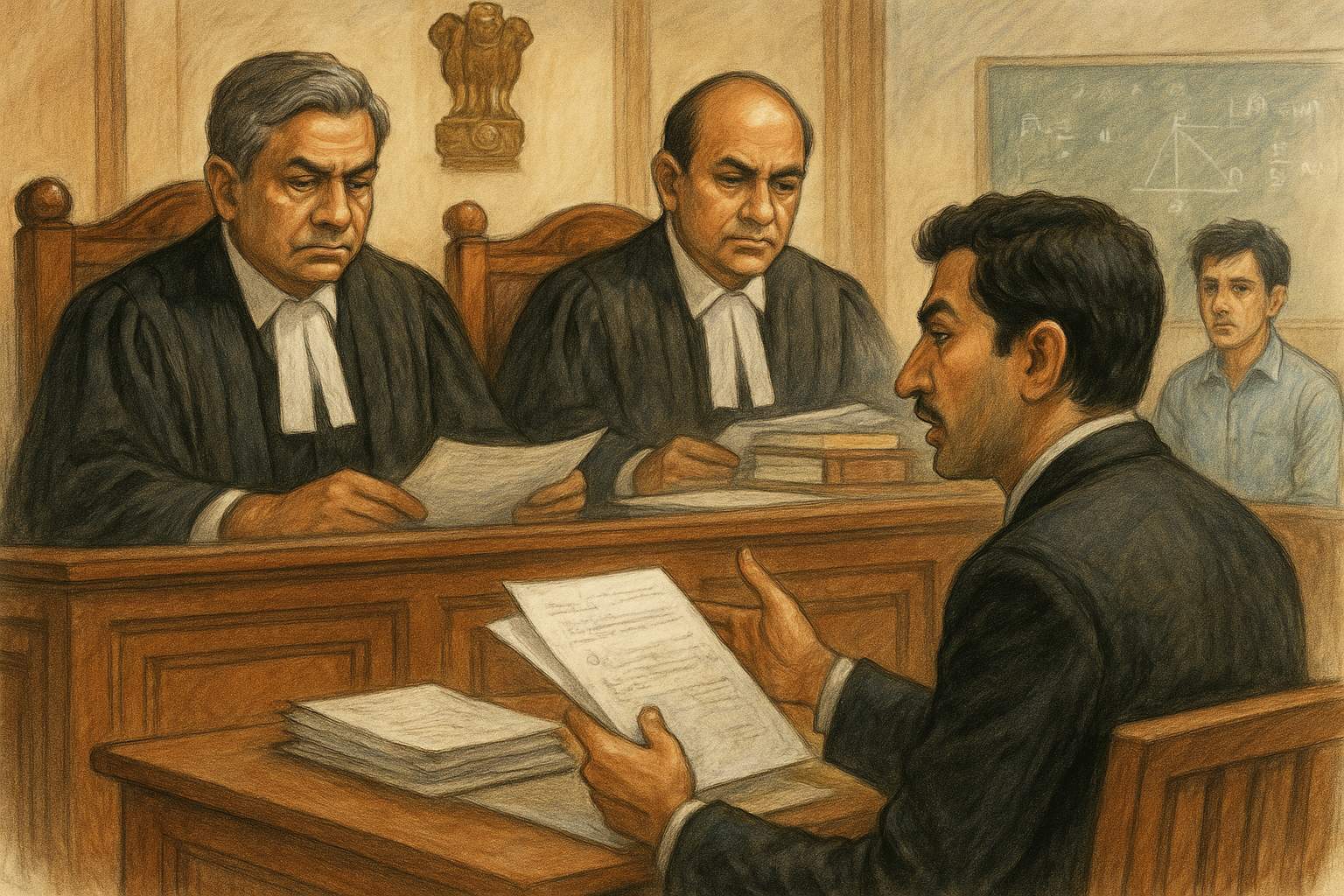
The Division Bench (two-Judge Bench) noted:
- Alternate Remedy Available and Not Availed
- The petitioner had a clear remedy of appeal to the Tribunal under the Central Excise and Finance Acts.
- The writ was filed after the time limit for filing appeal had already expired.
- There was no exceptional circumstance (like complete lack of jurisdiction or violation of natural justice) shown to justify bypassing the appellate remedy.
- Key Factual Aspects Unrebutted by the Petitioner
- The Court noted that the petitioner did not deny the findings recorded in the adjudication order about non-cooperation and non-production of documents at various stages.
- The petitioner also did not dispute that it had indeed provided taxable services as a sub-contractor. Its only defence was that the tax had supposedly been paid by the primary contractors.
- Failure to Prove Payment of Service Tax by Primary Contractors
- The Court examined paragraph 4.5 of the adjudication order, where the authority had analysed the challans and certificates produced.
- The figures claimed by the petitioner (about tax paid by primary contractors) were inconsistent and contradictory to the challans and certificates themselves.
- The Court agreed that the petitioner had “miserably failed” to establish that due service tax had already been paid to the Government.
- Liability of Sub-Contractor under Service Tax Law
- The Court accepted the reasoning that service tax is payable by the provider of service, even if such services are used as input by another contractor.
- Proper legal mechanism is that:
- The sub-contractor pays service tax on the value of services supplied.
- The main contractor then avails Cenvat credit of that tax while discharging its own tax liability on the ultimate works contract.
- Therefore, the petitioner cannot escape liability merely because the primary contractors claimed to have paid some tax on the project.
- Larsen & Toubro (VAT) Case Does Not Help Petitioner
- The petitioner’s reliance on Larsen & Toubro in the VAT context was found to be misplaced.
- The High Court clarified that the issues in that case related to sales tax/VAT on goods in works contracts, not service tax liability of a sub-contractor.
- In fact, when read with Tribunal decisions such as Murari Lal Singhal and Larsen & Toubro (Raipur), the legal position supports the view that sub-contractors are taxable persons in their own right and must discharge their own service tax liability.
Ultimately, the Patna High Court held that:
- The adjudication order was in accordance with law.
- No ground was made out to interfere under Article 226.
- The writ petition was dismissed.
Significance or Implication of the Judgment
This judgment has important implications for businesses, especially in infrastructure and construction sectors, and for their tax litigation strategy:
- Sub-Contractors Cannot Assume Tax Is “Handled” by Main Contractors
Sub-contractors must treat themselves as independent service providers. Merely because a work order says that the primary contractor will “bear service tax” or prices are “exclusive of service tax” does not automatically shift the statutory liability under the law. Unless the statute itself provides for reverse charge or special mechanism, the responsibility remains with the service provider. - Paper Trail Is Critical
The Court’s reasoning shows that unsupported assertions like “our principal has paid the tax” carry little weight without:- Matching challans,
- Clear allocation of amounts to specific services, and
- Consistent records.
Contradictory figures can seriously damage credibility.
- Cenvat Credit Mechanism Must Be Properly Used
The correct legal approach in a chain of contractors is:- Sub-contractor pays service tax →
- Main contractor takes credit →
- Exchequer does not suffer, and
- No double taxation occurs.
Trying to avoid payment at the sub-contractor level on the plea that someone else may have paid can backfire.
- Alternate Remedy and Limitation Are Not Technicalities
The judgment reinforces that statutory appeal timelines are strict. If a party allows the limitation period to lapse and then attempts to approach the High Court directly, the Court is reluctant to intervene unless there is a glaring jurisdictional error or violation of natural justice. - Compliance Discipline in Tax Matters
For businesses in Bihar and beyond, this decision is a reminder that:- Cooperating during investigation,
- Responding to notices in time, and
- Maintaining complete documentation
are essential to protect their rights in any future litigation.
Legal Issue(s) Decided and the Court’s Decision (with Reasoning)
- Whether the writ petition was maintainable despite availability of an alternate statutory remedy of appeal, which was not availed within limitation.
- Decision: Writ petition not maintainable.
- Reasoning:
- An efficacious appellate remedy existed under the Central Excise Act read with the Finance Act.
- The petitioner did not file an appeal within the stipulated time.
- No exceptional circumstances such as lack of jurisdiction or violation of natural justice were shown to justify bypassing the appellate forum.
- Whether a sub-contractor can avoid service tax liability on the ground that the primary contractor has paid tax on the overall works contract.
- Decision: Sub-contractor remains liable as service provider.
- Reasoning:
- Under the service tax law, liability is fixed on the provider of taxable service, unless statute provides otherwise (e.g., reverse charge).
- The petitioner failed to prove that service tax for its specific services had already been paid to the Government by the primary contractors.
- Cenvat credit rules provide a mechanism to avoid double taxation: tax paid by sub-contractor can be availed as credit by main contractor.
- Whether the adjudication order confirming tax, interest and penalties was legally sustainable.
- Decision: Adjudication order upheld.
- Reasoning:
- Findings regarding non-cooperation, failure to produce documents and contradictions in figures were not rebutted in the writ petition.
- The authority applied correct legal principles on liability of sub-contractors, supported by Tribunal precedents.
- No perversity or patent illegality was shown warranting interference under Article 226.
Judgments Referred by Parties
- State of Andhra Pradesh vs. Larsen & Toubro Limited, (2008) 17 VST 1 (SC) – relied upon by the petitioner to argue against double taxation in works contracts.
- Larsen & Toubro Limited vs. State of Andhra Pradesh, 2006 148 STC 616 (AP) – earlier High Court decision on which the Supreme Court ruling was based.
Judgments Relied Upon or Cited by Court
- Assistant Collector of Central Excise, West Bengal vs. Dunlop India Limited and Others, (1985) 1 SCC 260 : AIR 1985 SC 330 – on the principle that writ jurisdiction is not to be used as a substitute for statutory appeals.
- Tata Engineering and Locomotive Company Limited vs. Assistant Commissioner of Commercial Taxes and Another, AIR 1967 SC 1401 – on the rule of alternate remedy.
- Murari Lal Singhal vs. Commissioner of Central Excise and Service Tax, Jaipur-I, 2019 (25) G.S.T.L. 45 (Tri.) – on taxability of services provided by a sub-contractor and Cenvat credit.
- Larsen & Toubro Ltd. vs. Commissioner of Central Excise, Raipur, 2019 (26) G.S.T.L. 83 (Tri.-Del.) – holding that a sub-contractor cannot avoid its own service tax liability on the ground that the recipient has discharged tax on the project value.
Case Title
M/S MKB Power Construction Private Limited Vs. The Union of India
Case Number
Civil Writ Jurisdiction Case No. 13921 of 2024
Coram and Names of Judges
- Hon’ble Mr. Justice Rajeev Ranjan Prasad
- Hon’ble Mr. Justice Ramesh Chand Malviya
Names of Advocates and Who They Appeared For
- Mr. Rahul Kumar, Advocate – for the petitioner
- Mr. Anshuman Singh, Senior Standing Counsel, CGST & CX – for the respondents (tax department)
- Mr. Shivaditya Dhari Sinha, Assistant Counsel to the Additional Solicitor General – for the Union of India / revenue authorities
Link to Judgment
MTUjMTM5MjEjMjAyNCMxI04=-Z0Vk2mWuJW8=
If you found this explanation helpful and wish to stay informed about how legal developments may affect your rights in Bihar, you may consider following Samvida Law Associates for more updates.







