
Simplified Explanation of the Judgment
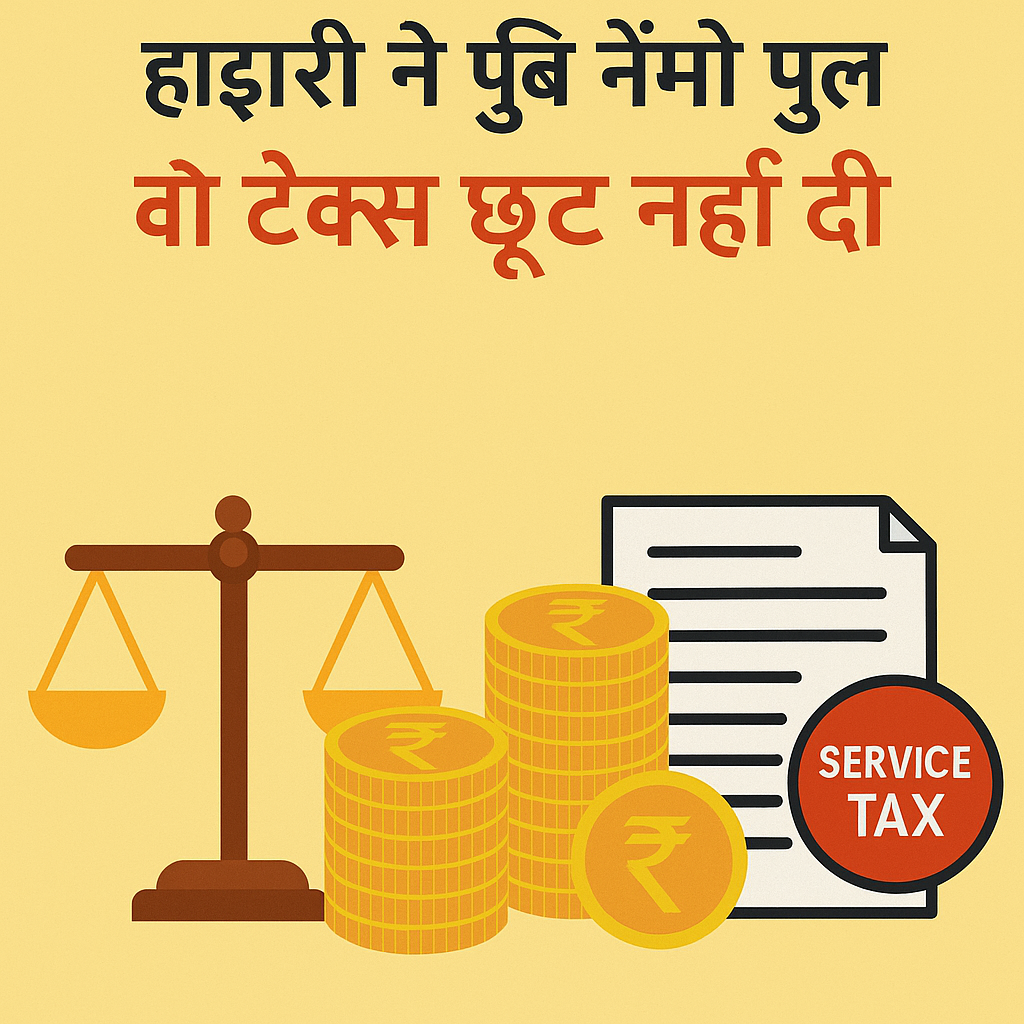
In this recent judgment dated 9 May 2025, the Patna High Court dealt with a petition filed by a government-owned construction company that builds roads and bridges in Bihar. The company challenged a service tax demand of over ₹38 crore raised by tax authorities for the period 2015–16 to June 2017. The petitioner company had argued that it was exempt from service tax under the “Mega Exemption Notification” as a government or governmental authority. However, the Court upheld the tax department’s view that the company was liable to pay service tax for the services rendered.
The core dispute centered on whether the petitioner company was required to pay service tax on (i) “centage” (a fee charged for overseeing bridge construction projects on behalf of the government), and (ii) on revenue received from toll collection and related services.
The company contended that:
- It is wholly owned by the Bihar Government and was set up to construct infrastructure on behalf of the State.
- It merely received reimbursement for establishment expenses through centage.
- Toll collection was done on behalf of the government, and it retained only 15% for administrative costs.
- It performed functions similar to those of a municipality under Article 243W of the Constitution and should be considered a governmental authority.
- The services it rendered were exempt under the Mega Exemption Notification (No.25/2012-ST).
On the other hand, the tax authorities argued:
- The petitioner did not carry out the construction work themselves but acted as an intermediary by awarding contracts to private builders.
- The centage was not reimbursement but a service fee.
- The company engaged contractors for toll collection and earned income from it.
- The company did not fall under the legal definitions of “Government,” “local authority,” or “governmental authority” as per the Finance Act, 1994 and Mega Exemption rules.
The High Court closely examined how the company functioned, the nature of its revenue, and relevant statutory definitions. It concluded:
- The company, though government-owned, is incorporated under the Companies Act and does not meet the legal threshold of a “governmental authority.”
- The toll collection services and centage fall within the scope of taxable services.
- The exemption notifications did not apply since the petitioner did not directly provide construction services using its own resources, but rather managed contracts.
In particular, the Court rejected the argument that centage was mere reimbursement. Instead, it recognized it as payment for managerial and technical services provided in overseeing bridge construction, which is taxable.
Interestingly, the tax demand also included amounts related to penalties deducted from contractors. On this issue, the Court accepted that such penalties were compensation for breach of contract and, based on CBIC circulars and CESTAT judgments, held that these amounts were not taxable under service tax.
Significance or Implication of the Judgment
This decision underscores a critical clarification on the tax liability of state-owned corporations. Even if fully owned by the government, a company may not qualify for tax exemptions unless it meets strict legal definitions. This case sends a strong message to similar government-run entities engaged in contract management or project execution that their income streams such as service charges, centage, and toll commissions may not be immune from indirect taxes.
Government departments and PSUs must carefully assess their legal status and tax obligations rather than assume blanket exemptions. The judgment also reinforces that merely routing public infrastructure funds through a government company does not shield such revenue from tax scrutiny.
Legal Issue(s) Decided and the Court’s Decision with reasoning
- Whether the petitioner qualifies as “government” or “governmental authority”:
- Decision: No.
- Reasoning: The company is registered under the Companies Act and not established by an act of Parliament or State Legislature, nor does it perform functions under Article 243W.
- Whether “centage” is taxable under service tax laws:
- Decision: Yes.
- Reasoning: Centage is a service fee for project execution and managerial oversight, not pure reimbursement.
- Whether toll collection service income is exempt:
- Decision: No.
- Reasoning: The company received commission for appointing contractors to collect tolls — a taxable service as clarified by CBEC.
- Whether penalty recovered from contractors is taxable:
- Decision: No.
- Reasoning: As per Circular No. 178/10/2022-GST and relevant CESTAT orders, such penalties are compensatory and not taxable.
- Whether the extended limitation period under Section 73(1) of Finance Act was rightly invoked:
- Decision: Yes.
- Reasoning: The company failed to declare its services or file returns, amounting to suppression of facts.
Judgments Referred by Parties
- Shapoorji Paloonji and Co. Pvt. Ltd. vs Commissioner, Customs, Central Excise and Service Tax (2016) 67 taxmann.com 2018 (Patna)
- Hindustan Steel Ltd. vs State of Orissa, (1969) 2 SCC 627
Judgments Relied Upon or Cited by Court
- Union of India vs Rajasthan Spinning and Weaving Mills, (2009) 13 SCC 448
- CESTAT Final Order No. 50898/2023 dated 06.07.2023
Case Title
Bihar Rajya Pul Nirman Nigam Ltd. vs Union of India & Others
Case Number
Civil Writ Jurisdiction Case No. 9979 of 2024
Coram and Names of Judges
Hon’ble Mr. Justice Rajeev Ranjan Prasad
Hon’ble Mr. Justice Sourendra Pandey
Names of Advocates and who they appeared for
- For the Petitioner: Mr. D.V. Pathy, Sr. Advocate; Mr. Sadashiv Tiwari, Mr. Hiresh Karan, Ms. Shivani Dewalla, Mr. Prachi Pallavi, Advocates
- For the Respondents: Dr. K.N. Singh, Sr. Advocate (ASGI); Mr. Anshuman Singh, Sr. SC, CGST and CX; Mr. Shivaditya Dhari Sinha, Advocate
Link to Judgment
e52d218c-ed9b-44d9-81f2-7e82a6b8cc2f.pdf
If you found this explanation helpful and wish to stay informed about how legal developments may affect your rights in Bihar, you may consider following Samvida Law Associates for more updates.







