
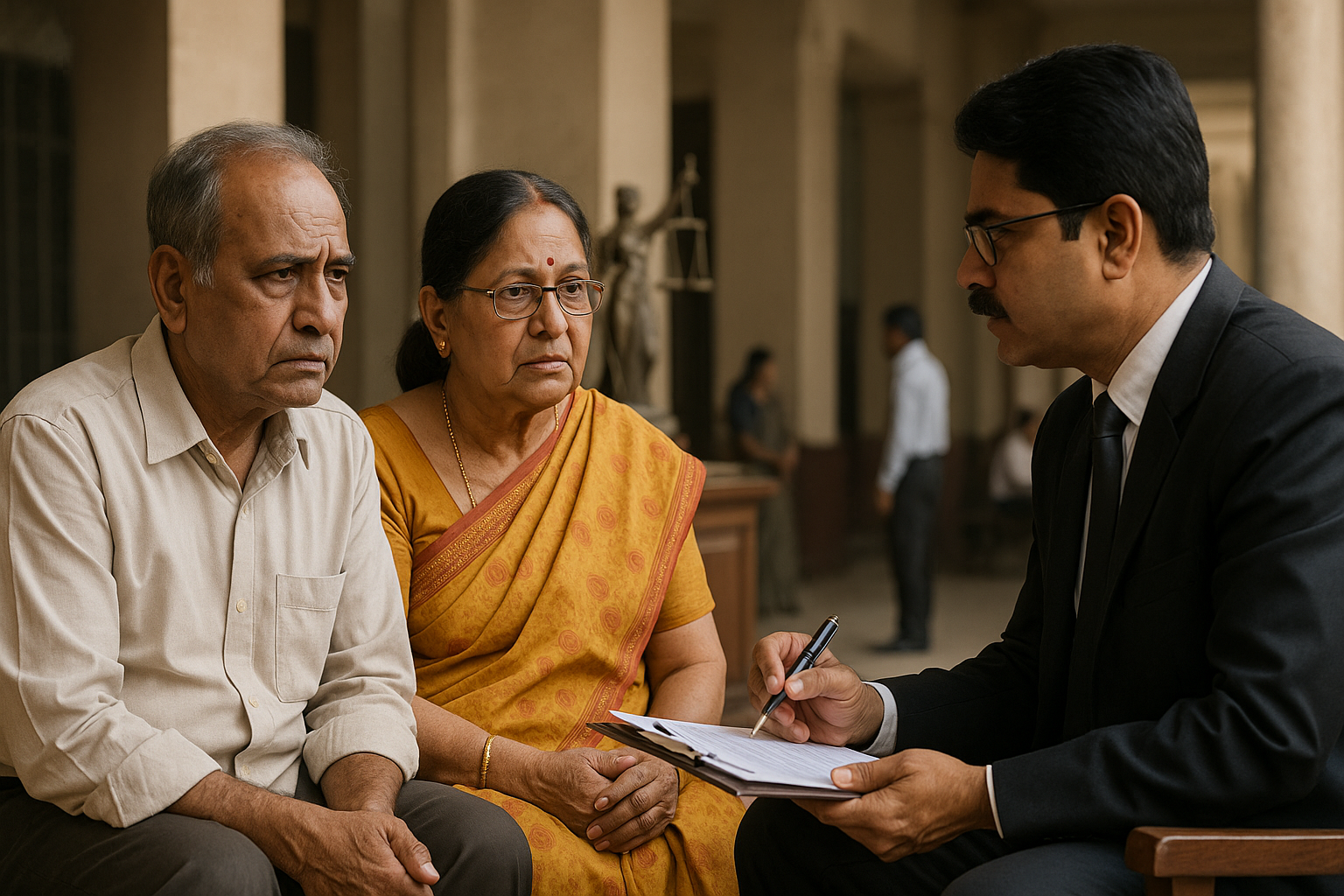
The Patna High Court, in a writ petition filed against an order of the Maintenance Tribunal, reaffirmed that aged parents and senior citizens in Bihar have a clear statutory right to seek protection, residence, and even eviction of abusive or harassing children from property that belongs to them. The Court refused to interfere with the Tribunal’s order which had directed the petitioner (son) and his wife to vacate a house owned and constructed by the elderly parents and to shift to another house owned by the same parents. The judgment is an important reaffirmation of the object of the Maintenance and Welfare of Parents and Senior Citizens Act, 2007—that elderly persons must be able to live with dignity, free from domestic harassment and economic exploitation.
Simplified Explanation of the Judgment
This case arose out of a family dispute between aged parents (senior citizens) and their son and daughter-in-law. The parents had approached the Sub-Divisional Officer, Patna Sadar-cum-Chairman, Maintenance Tribunal under the 2007 Act complaining that their son and daughter-in-law regularly misbehaved with them, abused them and created an atmosphere of tension inside the house. The parents were both above 70 years of age and the father was a retired/working person of modest means who had, out of his own income, purchased land and constructed a three-storied house at Lohanipur, Patna. He also owned another house at Jaganpura (P.S. Ram Krishna Nagar), also within Patna. The parents stated before the Tribunal that despite providing accommodation, education of grandchildren, and even purchasing land in the name of the daughter-in-law, the petitioners had started ill-treating them and were refusing to shift to the alternate house.
On this complaint, the Maintenance Tribunal registered Case No. 18 of 2017 and issued notice to the son and daughter-in-law. They appeared before the Tribunal and contested the complaint. Interestingly, in their reply before the Tribunal, the petitioners themselves requested that they may be permitted to live in the Lohanipur house till March 2018 because their children had to appear in the matriculation examination. This showed, in the High Court’s view, that even the petitioners had, at one stage, accepted the authority of the Tribunal and had virtually undertaken to vacate the premises after the exams.
After hearing both sides, the Maintenance Tribunal passed an order on 22.12.2017 directing the petitioners (son and daughter-in-law) to vacate the Lohanipur house within one month and to shift to the other house of the parents situated at Jaganpura. This was a classic exercise of power under the 2007 Act, which allows the Tribunal to pass appropriate residential and protective directions in favour of senior citizens, including directing eviction of abusive children from property owned by the parents.
Instead of complying with this order, the petitioners filed a writ petition before the Patna High Court in 2018 (Civil Writ Jurisdiction Case No. 1586 of 2018) challenging the Tribunal’s order. Their sole argument before the High Court was that the dispute had now been “compromised” and, therefore, the Tribunal’s order should be set aside. The parents, however, through their counsel, strongly denied any such compromise and reiterated before the High Court that the petitioners continued to harass them and that they indeed wanted the son and daughter-in-law to vacate the premises. They also highlighted that (i) the property was fully acquired and constructed from the father’s own income; (ii) he had even purchased land in the name of the petitioner-wife and also in the name of his daughter; (iii) despite all this, the petitioners continued to mistreat them; and (iv) the parents wanted to live peacefully on the second floor without day-to-day quarrels.
The High Court, presided over by Hon’ble Mr. Justice Mohit Kumar Shah, carefully examined the impugned order of the Maintenance Tribunal and the material on record. The Court noticed an important fact: the parents had two separate houses and both were their self-acquired properties. The Tribunal had not rendered the petitioners homeless; it had simply directed them to vacate one house (Lohanipur) and occupy the other house (Jaganpura) belonging to the same parents. Therefore, the direction was neither harsh nor illegal. The Court further observed that the Tribunal’s order did not suffer from any jurisdictional or procedural error and was fully consistent with the object of the 2007 Act, which is to ensure that senior citizens are protected from harassment by their own children.
The Court also recorded that the petitioners had themselves earlier undertaken before the Tribunal to vacate the house after the matriculation examination of their son to be held in March 2018. After giving such an undertaking, the Court held, they could not later turn around and say that they would not vacate the house. The writ jurisdiction of the High Court is discretionary and is generally not exercised to protect defaulting children against lawful orders passed in favour of aged parents.
Accordingly, the Patna High Court, by judgment dated 29.08.2022, dismissed the writ petition and upheld the order of the Maintenance Tribunal. The net effect of the judgment is that the son and daughter-in-law must vacate the Lohanipur house and shift to the Jaganpura house of the parents. This protects the senior citizens’ right to reside peacefully in their own property and prevents continued domestic harassment.
Significance or Implication of the Judgment
- The judgment sends a strong signal that courts in Bihar will protect senior citizens when they approach authorities under the Maintenance and Welfare of Parents and Senior Citizens Act, 2007.
- It clarifies that children do not acquire an automatic right to live in the self-acquired property of their parents, particularly when they misbehave or harass the parents.
- The case also shows that eviction orders passed by Maintenance Tribunals will be upheld if the property clearly belongs to the parents and the direction does not render the children homeless.
- For government authorities (SDOs, Maintenance Tribunals), this judgment is a reassurance that their eviction and relocation orders in favour of senior citizens will be sustained by the High Court if due process is followed.
- For the general public, it is a reminder that elderly parents can seek not only maintenance but also protection of residence against abusive children.
Legal Issue(s) Decided and the Court’s Decision with Reasoning
- Whether the Maintenance Tribunal was competent to direct the son and daughter-in-law to vacate the house owned by the parents?
✅ Yes. The Tribunal acted under the Maintenance and Welfare of Parents and Senior Citizens Act, 2007, which authorizes protective and residential directions in favour of parents/senior citizens. - Whether the High Court should interfere with the Tribunal’s order in writ jurisdiction?
✅ No. The High Court found no procedural irregularity or jurisdictional error in the Tribunal’s order. The order was based on undisputed ownership of the property by the parents and the continuing harassment faced by them. - Whether the plea of “compromise” raised by the petitioners was acceptable?
❌ No. The parents specifically denied any compromise. In such circumstances, and in view of the object of the 2007 Act, the High Court declined to set aside a lawful protective order merely on the basis of an unsubstantiated claim of settlement. - Whether the order was harsh because it displaced the petitioners from the house?
❌ No. The Tribunal had only asked the petitioners to shift to another house owned by the same parents at Jaganpura. Hence, there was no question of homelessness or violation of Article 21. - Whether the petitioners could resile from their earlier statement before the Tribunal that they would vacate after March 2018?
❌ No. The Court held that after taking such a stand before the Tribunal, it was not open to them to refuse to vacate later.
Case Title
Petitioners (son and daughter-in-law) vs. State of Bihar & Others
(Actual party names are withheld here to protect privacy; this format is suitable for publication.)
Case Number
Civil Writ Jurisdiction Case No. 1586 of 2018
Citation(s)
2023 (1) PLJR 66
Coram and Names of Judges
Hon’ble Mr. Justice Mohit Kumar Shah
Names of Advocates and who they appeared for
- For the petitioners: Mr. Nand Kishore Prasad Sinha, Advocate
- For the State/respondent authorities: Mr. Sajid Salim Khan, Standing Counsel-25
- For the private respondents (parents/senior citizens): Represented through State/respondent side as per record
Link to Judgment
MTUjMTU4NiMyMDE4IzEjTg==-CbG9eFczvg0=
If you found this explanation helpful and wish to stay informed about how legal developments may affect your rights in Bihar, you may consider following Samvida Law Associates for more updates.







