
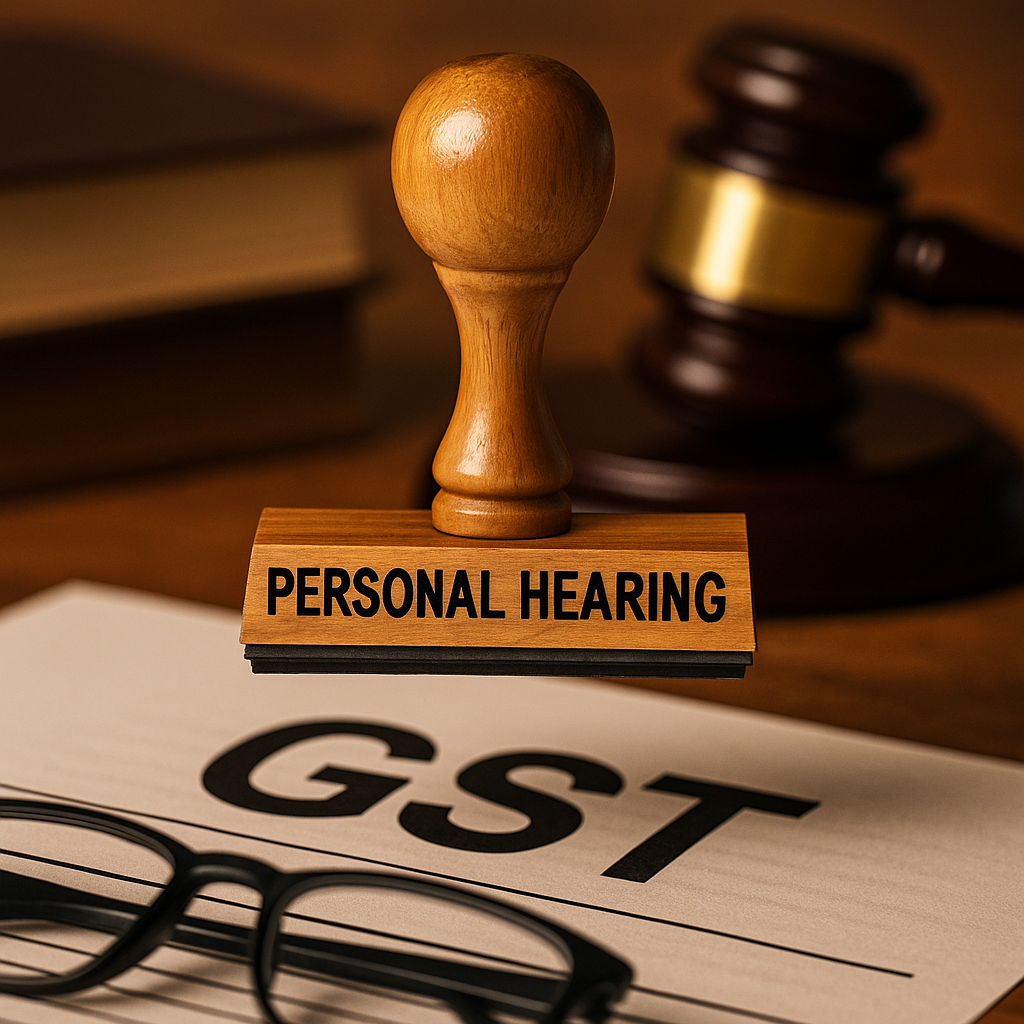
Simplified Explanation of the Judgment
This judgment delivered by the Patna High Court in 2023 deals with a large group of writ petitions filed by different business entities, traders, proprietorship firms, and companies operating in Bihar. Although the individual facts of each case differed slightly, the core grievance was common: GST assessment orders were passed against the petitioners without giving them a fair opportunity of hearing and in many cases after the statutory limitation period.
The petitioners were registered dealers under the Goods and Services Tax (GST) regime. They were subjected to assessment proceedings under the Bihar GST Act / Central GST Act, mainly for alleged discrepancies in returns, mismatch of input tax credit, or non-compliance with procedural requirements. The tax authorities issued show cause notices and subsequently passed final assessment orders raising tax demand, interest, and penalty.
The main problem, according to the petitioners, was that:
- Many assessment orders were passed ex parte, meaning without hearing the taxpayer.
- In several cases, the orders were passed mechanically, without dealing with the replies submitted by the taxpayers.
- Some orders were passed after the limitation period prescribed under GST law, relying incorrectly on COVID-19 extensions.
- Appellate remedies were ineffective because either appeals were rejected on technical grounds or pre-deposit requirements made them impractical.
Because of these reasons, the petitioners approached the Patna High Court directly under Article 226 of the Constitution, seeking quashing of the assessment orders and consequential recovery proceedings.
The State and Union authorities argued that:
- Notices were uploaded on the GST portal and taxpayers failed to respond.
- Adequate opportunity was given as per law.
- The High Court should not interfere because an alternative appellate remedy was available.
After hearing both sides and examining the records, the High Court found that procedural fairness was seriously compromised in most of the cases. The Court observed that GST law, though strict, does not dispense with the principles of natural justice. Merely uploading a notice on the portal without ensuring effective opportunity of hearing cannot justify harsh civil consequences.
The Court also took note of the confusion created during the COVID-19 period. While the Supreme Court had extended limitation for litigants, the tax department misapplied those extensions to justify delayed assessments, which was legally impermissible.
Ultimately, the Court held that the assessment orders suffered from serious legal defects, including violation of natural justice and lack of jurisdiction due to limitation in certain cases. Accordingly, the impugned orders were set aside with liberty to the authorities to proceed afresh in accordance with law, after granting proper opportunity of hearing.
This judgment is significant because it addresses systemic issues in GST administration and protects small and medium businesses from arbitrary tax actions.
Significance or Implication of the Judgment
- Reinforces that GST authorities must follow due process, even in digital assessments
- Protects taxpayers from ex parte and mechanical orders
- Clarifies that COVID-19 limitation extensions cannot be misused by tax departments
- Encourages fair tax administration and accountability
- Provides relief to businesses facing coercive recovery without proper hearing
This decision will benefit not only the petitioners but also thousands of GST-registered dealers in Bihar who face similar issues.
Legal Issue(s) Decided and the Court’s Decision
- Whether GST assessment orders passed without personal hearing are valid
- ❌ Held invalid due to violation of principles of natural justice
- Whether assessment orders passed beyond statutory limitation can be sustained
- ❌ Held unsustainable; COVID extensions cannot be applied mechanically
- Whether availability of alternative remedy bars writ jurisdiction
- ❌ No, when orders are patently illegal or violate natural justice
- Whether portal-based notices alone constitute sufficient opportunity
- ❌ No, effective and meaningful opportunity is mandatory
Judgments Referred by Parties (with citations)
- Supreme Court orders on limitation during COVID-19
(Cognizance for Extension of Limitation, Suo Motu Writ)
Judgments Relied Upon or Cited by Court (with citations)
- Whirlpool Corporation v. Registrar of Trade Marks
- Calcutta Discount Co. Ltd. v. ITO
- Principles of Natural Justice under Article 14
Case Title
Shtrudhan Kumar Amit Kumar Vs. Union of India through the Secretary
Case Number
Civil Writ Jurisdiction Case No. 9108 of 2021
Names of Advocates and Who They Appeared For
- Advocates for the petitioners: Various counsels
- Advocates for the State and Union: Government counsel
Link to Judgment
MTUjMjg1NCMyMDIxIzEjTg==—am1–OyJ–am1–5LSOHQ=
If you found this explanation helpful and wish to stay informed about how legal developments may affect your rights in Bihar, you may consider following Samvida Law Associates for more updates.







