
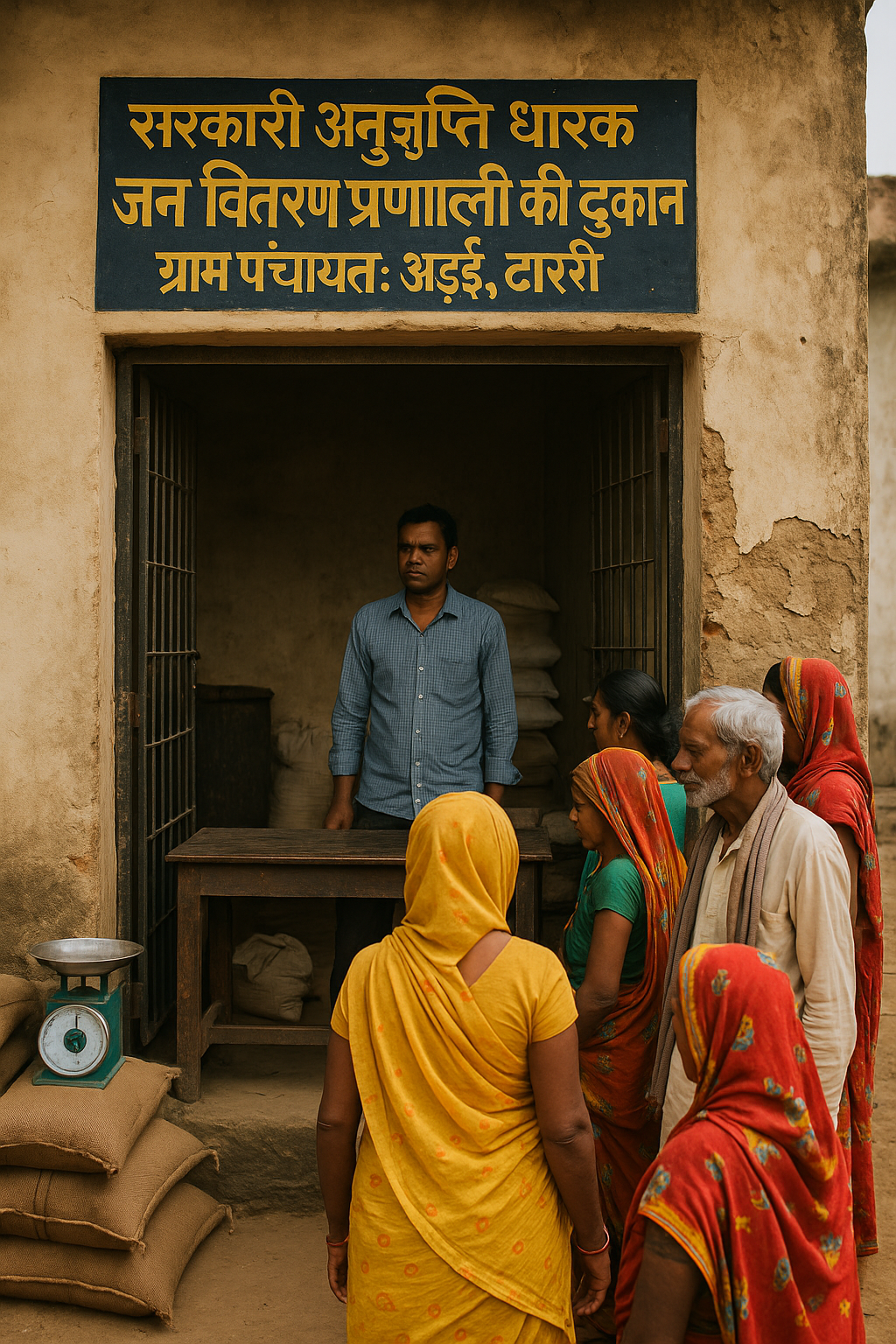
The Patna High Court, in an oral judgment delivered on 07 April 2021, dismissed a writ petition challenging the cancellation of a Fair Price Shop (FPS) licence issued under the Bihar Targeted Public Distribution System (Control) Order, 2016. The Court found that the licensing authority had passed a speaking and reasoned order based on an enquiry that revealed irregularities in distribution during the COVID-19 period, including non-supply of foodgrains for June 2020 to several beneficiaries and overcharging for kerosene and other items.
The petitioner had originally obtained the FPS licence for a village in Gaya district. Complaints were received by the licensing authority, following which an enquiry was ordered and conducted by the Sub-Divisional Officer and the Block Supply Officer. Beneficiaries reportedly stated that supplies were irregular and that many did not receive entitlements for June 2020. There were also allegations of charging more than the fixed rates for kerosene and other commodities. Based on the enquiry report, a show-cause notice dated 10 July 2020 was issued, and after considering the reply, the licensing authority cancelled the licence by order dated 27 July 2020 under Clause 27 of the 2016 Control Order.
Before the High Court, the petitioner’s primary argument was that only three days were granted to reply to the show-cause notice, which allegedly violated the principles of natural justice. The petitioner also argued that there was no breach of licence terms or statutory provisions. The State, opposing the writ, pointed out that the cancellation followed findings of violations of several licence conditions (including conditions aligned with the National Food Security Act, 2013), and the petitioner had an adequate opportunity to respond.
The Court first addressed the natural justice plea. On examining the record, it noted that the petitioner had, in fact, filed a detailed 52-page reply dated 18 July 2020, dealing point-wise with the show-cause notice and annexing multiple enclosures. Importantly, the petitioner did not, in that reply, claim insufficient time or seek an extension. The Court observed that neither any specific prejudice was pleaded nor shown. In these circumstances, the three-day period, when coupled with an actual, elaborate reply, did not amount to denial of reasonable opportunity.
Turning to the merits, the Court noted that the cancellation order (annexed in the writ as Annexure-24) considered the enquiry report in detail, set out the petitioner’s defence, and recorded findings on each point. For example, against the petitioner’s assertion that the complainant-beneficiaries had been tagged to another FPS for the month of June 2020, the licensing authority found—on the materials before it—that this stand was factually incorrect. The order explained how the petitioner breached licence terms and thereby contravened the Control Order, 2016 and the National Food Security Act, 2013.
In judicial review, the High Court emphasized, it does not sit as an appellate authority to re-appreciate evidence or substitute its satisfaction for that of the statutory authority. The test is whether the impugned order is within jurisdiction, based on relevant material, and adheres to the principles of natural justice. On these tests, the order cancelling the FPS licence was found to be a speaking, reasoned, and jurisdictionally proper order—not suffering from perversity or illegality warranting interference under Article 226 of the Constitution. Consequently, the writ petition was dismissed without costs.
Significance or Implication of the Judgment (For general public or government)
This judgment sends a clear signal that public distribution system (PDS) licences carry enforceable obligations, particularly during crises such as the COVID-19 pandemic. Where an enquiry, conducted by competent officials, records beneficiary-level irregularities like non-supply and over-pricing, the licensing authority can—and must—act decisively under the Control Order.
For the public, especially priority and Antyodaya households, the ruling reinforces that complaints about non-supply or overcharging can lead to meaningful administrative action if supported by enquiry findings. For FPS dealers, the case underlines the importance of strict compliance with licence terms, transparent pricing, and accurate beneficiary records. Procedurally, the judgment also clarifies that a short response period in a show-cause notice will not, by itself, vitiate the process if the dealer manages to file a detailed, point-wise reply and cannot show actual prejudice. For administrators, it highlights the need for speaking orders: when cancellations are reasoned, reflect the evidence gathered, and consider the dealer’s defence, courts are reluctant to interfere.
From a governance perspective, the decision contributes to the integrity of the PDS by affirming that enforcement actions—when fairly conducted—will withstand judicial scrutiny. It also encourages prompt response to field complaints and underscores that the National Food Security Act’s objectives must be safeguarded at the last-mile delivery point.
Legal Issue(s) Decided and the Court’s Decision with reasoning
- Whether the petitioner was denied adequate opportunity of hearing due to a three-day timeline in the show-cause notice.
Decision: No. The petitioner actually filed a 52-page, point-wise reply with enclosures and never sought more time or pleaded prejudice. The Court held that reasonable opportunity was afforded in the facts. - Whether the licensing authority’s cancellation order was arbitrary, perverse, or violative of natural justice.
Decision: No. The order was within jurisdiction, detailed the enquiry findings, dealt with the petitioner’s defence, and recorded reasoned conclusions about breaches of licence terms and statutory provisions. Hence, no ground for interference under Article 226. - Whether availability of an alternative statutory remedy (appeal) barred the writ petition.
Observation: The petitioner argued that natural justice violations permit writ despite alternate remedy. The Court, however, having found no such violation and seeing a speaking, reasoned order, declined interference and dismissed the writ.
Judgments Referred by Parties (with citations) — Skip if none.
Judgments Relied Upon or Cited by Court (with citations) — Skip if none.
Case Title
Shiv Shankar Singh @ Shankar Singh v. State of Bihar & Ors.
Case Number
Civil Writ Jurisdiction Case No. 8159 of 2020
Citation(s)
2021(2) PLJR 369
Coram and Names of Judges
Hon’ble Mr. Justice Chakradhari Sharan Singh (Oral Judgment dated 07-04-2021).
Names of Advocates and who they appeared for
- For the petitioner: Mr. Manish Kumar No. 2, Advocate; Mr. Gajendra Kumar Singh, Advocate.
- For the respondents (State): Mr. Prashant Pratap, G.P.-2.
Link to Judgment
MTUjODE1OSMyMDIwIzEjTg==—am1–yQKWDkstBI=
If you found this explanation helpful and wish to stay informed about how legal developments may affect your rights in Bihar, you may consider following Samvida Law Associates for more updates.







