
Simplified Explanation of the Judgment
This judgment of the Patna High Court is a significant ruling under the Motor Vehicles Act, 1988, where the Court revisited the concept of “just compensation” and corrected serious errors committed by the Motor Accident Claims Tribunal (MACT) while calculating compensation for the family of a deceased accident victim.
The case was filed by the widow, father, and five minor children of a young man who died in a road accident in the year 2006. The appellants approached the Patna High Court seeking enhancement of compensation, as the Tribunal had awarded a very low amount by mechanically applying outdated provisions of the law.
The appeal was decided by Hon’ble Mr. Justice Rajeev Ranjan Prasad on 11 January 2023 in Miscellaneous Appeal No. 657 of 2008.
Background of the Case
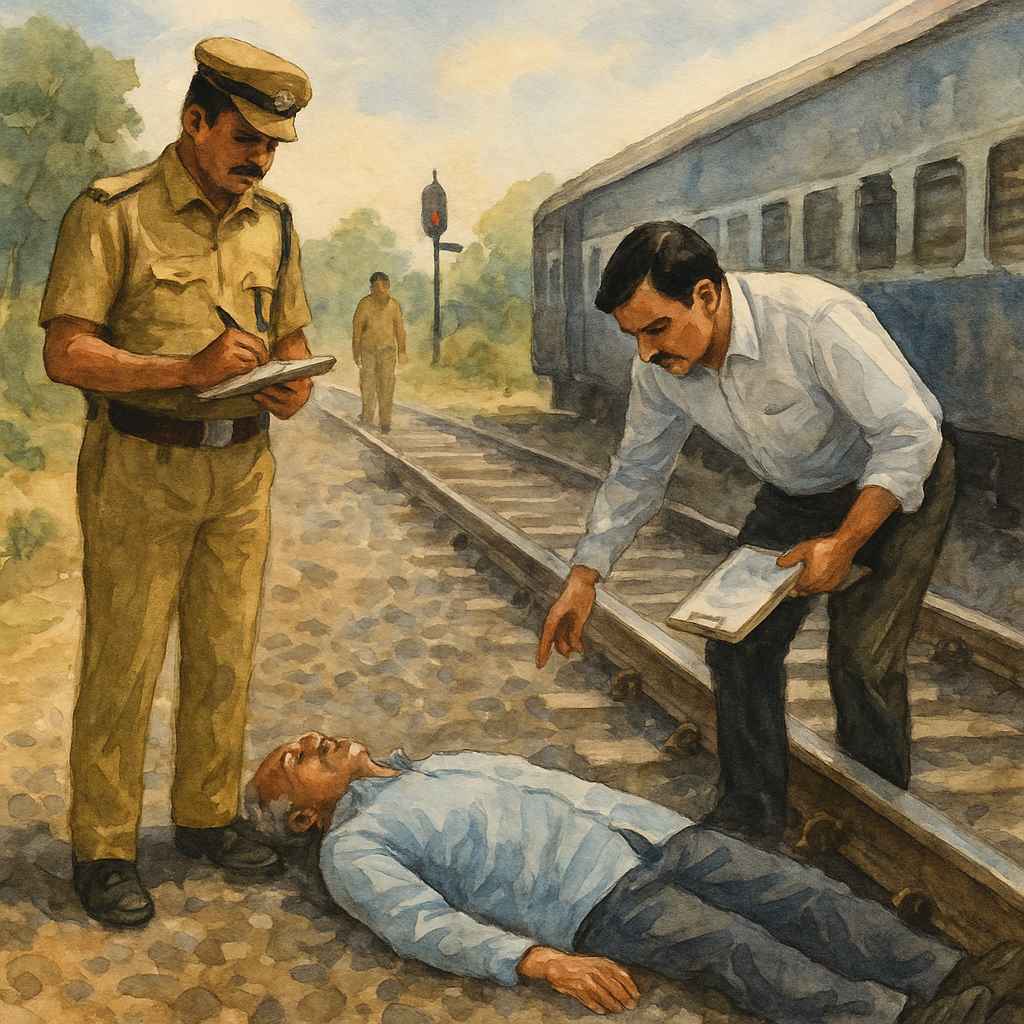
The accident occurred on 17.05.2006 near Punaura Pundrik Pokhar in the district of Sitamarhi. A jeep, driven in a rash and negligent manner, hit two pedestrians. One of them died on the spot, while Pramod Kumar @ Rai, aged about 26 years, succumbed to his injuries during treatment.
A police case was registered under Sections 279 and 304A of the Indian Penal Code. The legal heirs of the deceased filed Claim Case No. 126 of 2006 before the Motor Accident Claims Tribunal.
The claimants pleaded that:
- The deceased was a matriculate and worked as a teacher at a Lok Shiksha Kendra,
- He earned ₹1,000 per month from government honorarium and ₹2,500 per month from private tuition,
- His total monthly income was around ₹3,500, and
- He was maintaining his father, wife, and five minor children, all of whom were fully dependent on him.
Tribunal’s Award
By judgment dated 02.06.2008, the MACT allowed the claim but awarded only ₹1,89,500 as total compensation, out of which ₹1,39,500 was payable with 6% interest.
The Tribunal:
- Ignored oral and documentary evidence regarding the deceased’s income,
- Applied Schedule II of the Motor Vehicles Act, treating the deceased’s income as notional income of ₹15,000 per year,
- Did not add any future prospects,
- Deducted one-third towards personal expenses, and
- Granted meagre amounts under conventional heads such as loss of consortium and funeral expenses.
Aggrieved by this extremely low award, the dependents filed an appeal before the Patna High Court seeking enhancement.
Issues Before the High Court
The Patna High Court was required to examine:
- Whether the Tribunal was justified in applying Schedule II for an accident that occurred in 2006,
- Whether the income of the deceased was wrongly assessed,
- Whether future prospects ought to have been added,
- What should be the correct deduction for personal expenses, given the number of dependents, and
- Whether compensation under conventional heads was properly awarded.
Findings and Reasoning of the High Court
The High Court held that the Tribunal had committed serious legal errors.
1. Wrong Application of Schedule II
The Court noted that Schedule II was introduced in 1994, based on wage data of 1993, when daily wages of an unskilled worker were around ₹41.25. Applying this outdated Schedule to a 2006 accident was completely unjustified.
The Court relied upon Supreme Court judgments which have consistently held that Schedule II has become redundant and unworkable due to inflation and rising cost of living.
2. Assessment of Income
The Court observed that even if strict proof of employment was doubted, the deceased could not be treated as earning less than an unskilled daily wage worker in 2006.
It was noted during arguments that in 2006, the daily wage rate was around ₹89 per day. Accordingly, the Court assessed the deceased’s income as:
- ₹89 × 26 days = ₹2,314 per month
This itself was much higher than the notional income adopted by the Tribunal.
3. Future Prospects
Relying on authoritative Supreme Court judgments, the High Court held that future prospects must be added even for self-employed or fixed-salary persons.
Since the deceased was below 40 years of age, the Court added 40% of the established income towards future prospects.
4. Deduction for Personal Expenses
The deceased had seven dependents – his father, wife, and five minor children. In such circumstances, deducting one-third of income towards personal expenses was held to be incorrect.
The Court ruled that only one-fifth (1/5th) should be deducted towards personal expenses.
5. Conventional Heads of Compensation
The Tribunal had awarded extremely low amounts such as ₹2,500 for loss of estate and ₹5,000 for consortium. The High Court corrected this by applying settled law and awarded:
- Loss of estate – ₹15,000
- Funeral expenses – ₹15,000
- Spousal consortium – ₹40,000
- Parental consortium – ₹40,000 each to five children (₹2,00,000)
- Filial consortium – ₹40,000 to the father
Final Calculation by the High Court
Based on correct legal principles, the Court recalculated compensation as follows:
- Monthly income: ₹2,314
- Add future prospects @40%: ₹925.60
- Total: ₹3,239.60
- Deduct personal expenses (1/5th): ₹647.92
- Monthly dependency: ₹2,591.68
- Annual dependency: ₹2,591.68 × 12
- Multiplier: 17
- Loss of dependency: ₹5,28,702.72
Adding conventional heads, the total compensation came to:
₹8,38,702.72
After deducting the amount already paid, the balance payable was:
₹6,49,202.72, with 9% interest from the date of filing of the claim till payment.
The Court directed that the remaining amount be paid within two months.
Significance or Implication of the Judgment
This judgment is extremely important for motor accident claimants in Bihar because it:
- Reaffirms that the Motor Vehicles Act is a welfare legislation,
- Declares that outdated schedules cannot be blindly applied,
- Strengthens the concept of “just compensation”,
- Ensures proper application of future prospects and consortium, and
- Protects large dependent families from unfairly low awards.
It sends a clear message that Tribunals must apply current economic realities and binding Supreme Court law, not mechanical formulas.
Legal Issue(s) Decided and the Court’s Decision
- Whether Schedule II could be applied to a 2006 accident?
➤ No. It is outdated and unsuitable. - Whether future prospects should be added for a young deceased?
➤ Yes. 40% addition was mandatory. - What is the correct deduction for personal expenses with many dependents?
➤ One-fifth, not one-third. - Whether compensation under conventional heads was inadequate?
➤ Yes. Enhanced as per settled law.
Judgments Referred by Parties (with citations)
- Sarla Verma v. Delhi Transport Corporation, (2009) 6 SCC 121
- National Insurance Co. Ltd. v. Pranay Sethi, (2017) 16 SCC 680
- United India Insurance Co. Ltd. v. Satinder Kaur, (2021) 11 SCC 780
Judgments Relied Upon or Cited by Court (with citations)
- Pranay Sethi (2017) 16 SCC 680
- Sarla Verma (2009) 6 SCC 121
- Rajesh v. Rajbir Singh, (2013) 9 SCC 54
Case Title
Claimants (Widow, Father and Minor Children) v. Vehicle Owner & Insurance Company
Case Number
Miscellaneous Appeal No. 657 of 2008
Citation(s)
2023 (1) PLJR 546
Coram and Names of Judges
Hon’ble Mr. Justice Rajeev Ranjan Prasad
Names of Advocates and who they appeared for
- For the Appellants: Mr. Mukesh Prasad Singh, Advocate
- For the Insurance Company: Mr. Sanjay Singh, Advocate
Link to Judgment
MiM2NTcjMjAwOCMxI04=—ak1–utsphI0R68=
If you found this explanation helpful and wish to stay informed about how legal developments may affect your rights in Bihar, you may consider following Samvida Law Associates for more updates.







