
Simplified Explanation of the Judgment
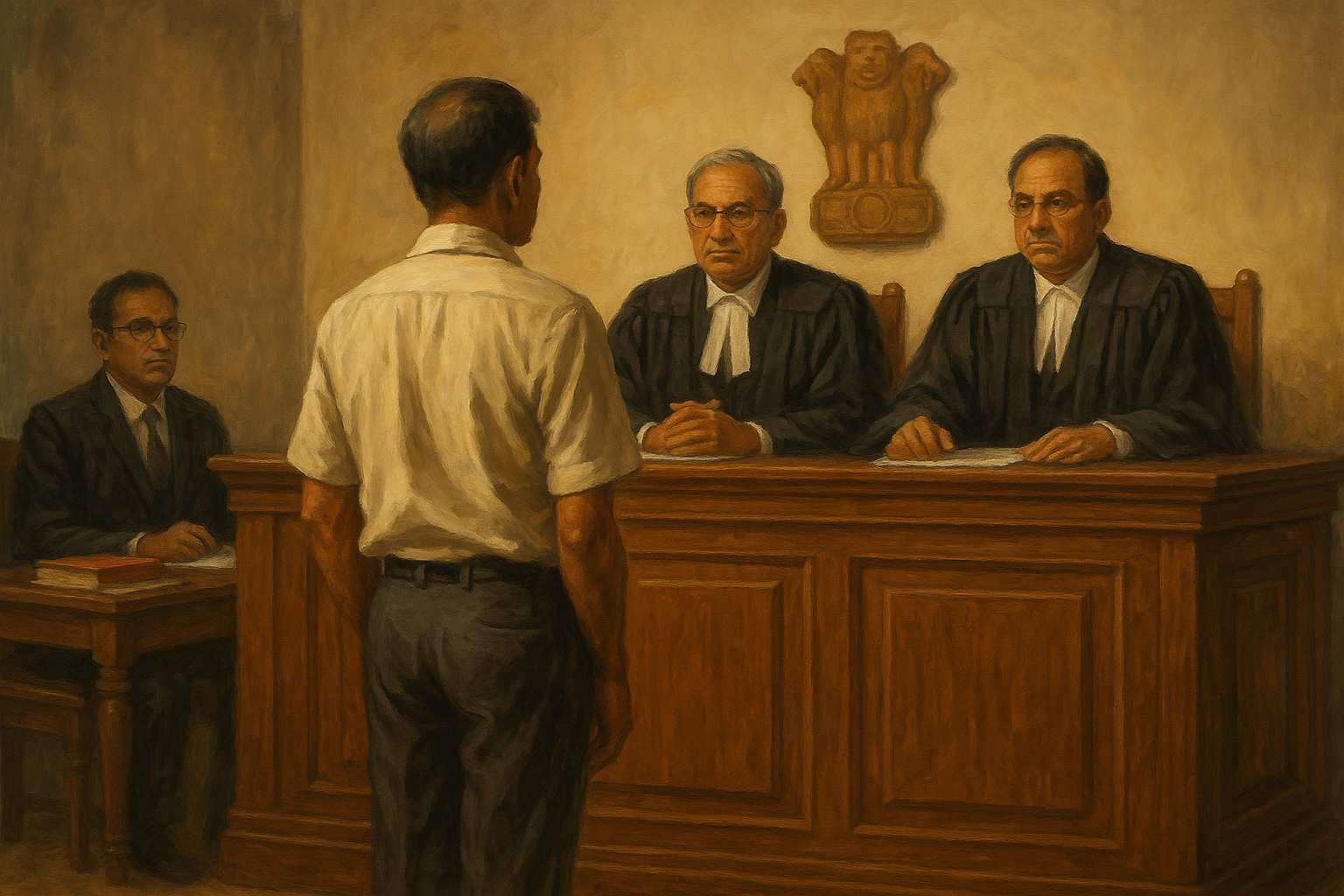
The Patna High Court has dismissed a writ petition filed by two government employees—both drivers in the Central Excise and Service Tax Department—who sought retrospective promotion benefits. The petitioners had demanded that their promotion to the post of Driver Grade-II be given effect from 1 April 2013, instead of 24 July 2014, the date on which they were actually promoted.
The Division Bench comprising Hon’ble Mr. Justice P.B. Bajanthri and Hon’ble Mr. Justice Purnendu Singh upheld the decision of the Central Administrative Tribunal (CAT), Patna Bench, which had earlier rejected the drivers’ plea on the ground of delay and laches (undue delay in approaching the court).
Background of the Case
The petitioners were employees in the office of the Chief Commissioner, Central Excise and Service Tax, Patna. They claimed that under the departmental promotion scheme, their names should have been considered for promotion to Driver Grade-II as of 1 April 2013. However, the department granted them promotion only in July 2014.
Believing that the delay was unjustified, the employees first submitted representations in September 2015 and June 2016, asking that their promotion dates be corrected to 2013. The department rejected these representations in January 2016 and August 2016.
After this, they approached the Central Administrative Tribunal (O.A. No. 642 of 2016), which dismissed their application on 30 January 2020, citing that the claim had been made too late—more than two years after the cause of action had arisen. The Tribunal held that administrative matters such as promotion or seniority must be raised promptly, ideally within six months of the grievance arising.
Dissatisfied, the petitioners moved the Patna High Court under Article 226 of the Constitution, challenging the Tribunal’s order.
Court’s Observations
The High Court agreed with the Tribunal’s reasoning. It observed that the cause of action first arose on 1 April 2013, when the petitioners should have been considered for promotion, and again on 24 July 2014, when they were actually promoted. However, they did not challenge this until 2015–2016, which the Court found to be an unreasonable delay.
The Court relied on the landmark judgment of the Supreme Court in P.S. Sadasivaswamy vs. State of Tamil Nadu (AIR 1974 SC 2271), where it was held that an employee aggrieved by denial of promotion must approach the court or tribunal within a reasonable time—preferably within six months. The same principle was reaffirmed in Vijay Kumar Kaul & Ors. vs. Union of India [(2012) 7 SCC 610].
The High Court also highlighted another important procedural lapse: the petitioners had not made parties of all employees who were promoted between 1 April 2013 and 24 July 2014. Granting retrospective promotion to the petitioners would have affected the seniority and rights of those other officers who were not even heard in this case. The Court said that entertaining such a request without hearing all affected parties could lead to “administrative chaos.”
Decision
Considering both the delay and non-joinder of necessary parties, the Court dismissed the writ petition. It observed that revisiting old promotion disputes after several years is not in public interest, as it disrupts the settled seniority structure within departments.
Thus, the petitioners’ plea to backdate their promotions to 2013 was rejected, and the order of the Tribunal was affirmed.
Significance or Implication of the Judgment
- Timeliness is Crucial in Service Matters: The judgment reiterates that employees must act promptly if they believe their service rights—such as promotion or seniority—are affected. Delayed petitions are likely to be dismissed, even if there is merit.
- Administrative Stability: The decision upholds the principle that settled promotions and seniorities should not be disturbed years later, as doing so can lead to widespread confusion and resentment among employees.
- Legal Reminder to Government Servants: Government employees should not wait indefinitely before approaching the tribunal or court; instead, they must act within a “reasonable period,” usually six months.
- Procedural Fairness: The Court emphasized that before granting any benefit that might affect others’ service rights, all potentially affected persons must be included as parties to the case.
Legal Issues and Court’s Decision
- Whether the petitioners were entitled to retrospective promotion from 1 April 2013?
➤ Court’s Finding: No. Their promotion was validly given in 2014, and they failed to raise the issue within a reasonable time. - Whether the delay in filing the case was fatal to their claim?
➤ Court’s Finding: Yes. The petitioners approached the authorities nearly two years after their promotion, which was unjustified under established law. - Whether the petition could be allowed without making other promoted employees parties to the case?
➤ Court’s Finding: No. Relief affecting others’ rights cannot be granted behind their back; doing so would cause administrative disturbance.
Judgments Referred by Parties
- P.S. Sadasivaswamy vs. State of Tamil Nadu, AIR 1974 SC 2271
- Vijay Kumar Kaul & Ors. vs. Union of India, (2012) 7 SCC 610
Judgments Relied Upon or Cited by Court
- P.S. Sadasivaswamy vs. State of Tamil Nadu, AIR 1974 SC 2271
- Vijay Kumar Kaul & Ors. vs. Union of India, (2012) 7 SCC 610
Case Title
Drivers (Petitioners) vs. Union of India & Others
Case Number
Civil Writ Jurisdiction Case No. 14811 of 2021
Citation(s)
2023 (1) PLJR 217
Coram and Names of Judges
Hon’ble Mr. Justice P.B. Bajanthri
Hon’ble Mr. Justice Purnendu Singh
Names of Advocates and who they appeared for
- For the Petitioners: Mr. M.P. Dixit, Mr. S.K. Dixit, Mr. S.K. Chaubey, Mrs. Swastika, Advocates
- For the Respondents: Mr. Anshay Bahadur Mathur, Advocate
Link to Judgment
MTUjMTQ4MTEjMjAyMSMxI04=-gkeNZh4C53A=
If you found this explanation helpful and wish to stay informed about how legal developments may affect your rights in Bihar, you may consider following Samvida Law Associates for more updates.







