
Simplified Explanation of the Judgment
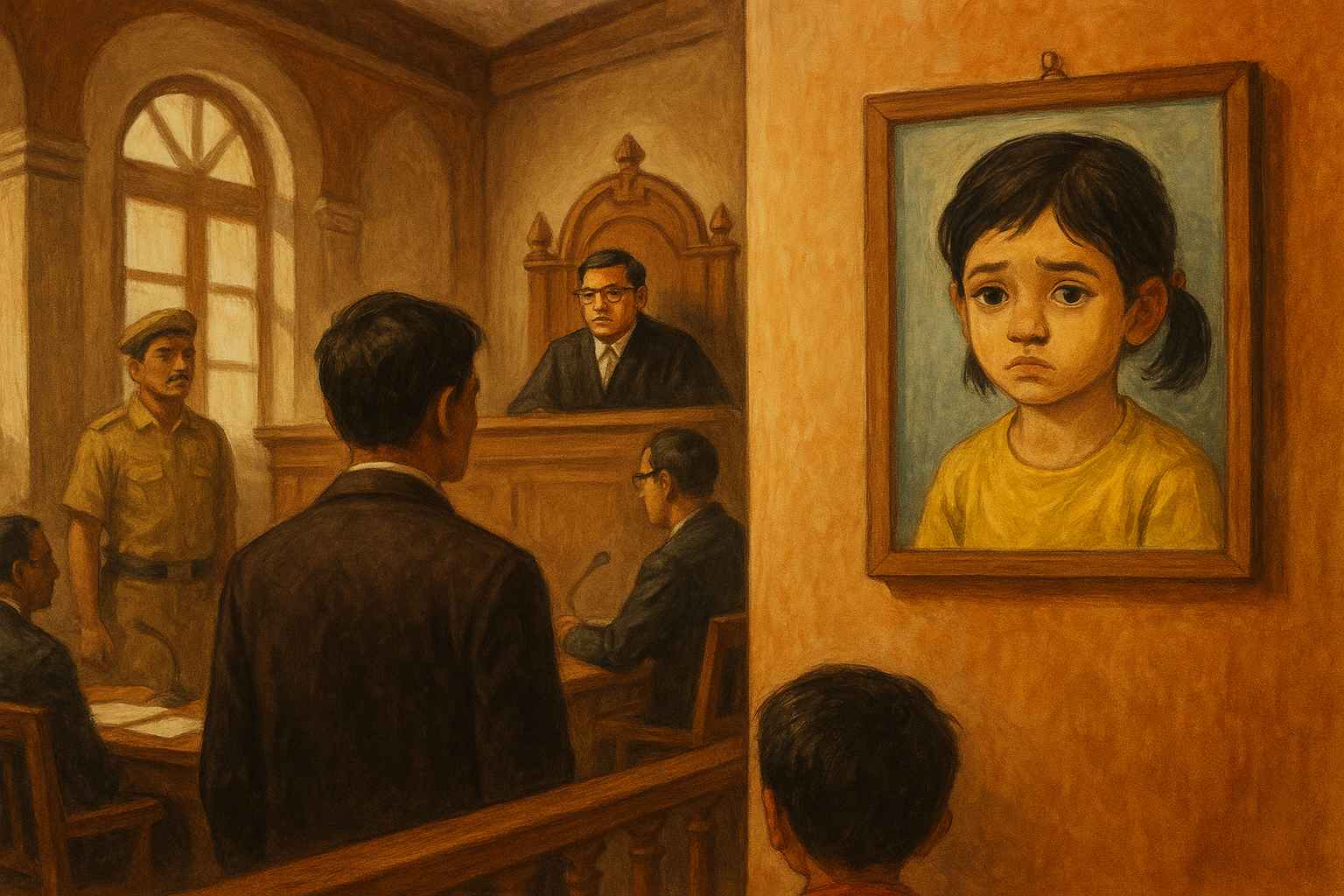
In a crucial judgment concerning the safety of children and accountability of the police, the Patna High Court transferred the investigation of a missing six-year-old girl’s case from the Bihar Police to the Central Bureau of Investigation (CBI). The Court found that the local police had failed to conduct a fair, prompt, and scientific investigation, despite the seriousness of the offence and repeated judicial directions.
The case began when the petitioner—a father from Muzaffarpur—approached the Court seeking help in tracing his missing daughter, who disappeared on 16 February 2021 while playing near a Saraswati Puja pandal outside their home. An FIR was registered under Section 363 IPC (kidnapping) the next day, but no progress was made in tracing the child.
The petitioner submitted several written complaints to the Senior Superintendent of Police (SSP), Inspector General, and Director General of Police, reporting that he was being threatened by certain persons connected to the suspects and even offered to pay money for his child’s release. However, despite these grave allegations, the local police allegedly took no decisive action.
When the case came before the High Court, Hon’ble Justice Rajeev Ranjan Prasad expressed deep dissatisfaction with the conduct of the investigating officers and the Deputy Superintendent of Police. The Court examined the case diary and found that the investigation was superficial and largely confined to paperwork. There were long gaps between supervisions, and many directions remained unimplemented.
A particularly disturbing revelation appeared in the case diary: one suspect, Akash Kumar, reportedly stated that his brother had sold his own three-year-old daughter to a human trafficking gang. Yet, neither the Investigating Officer (I.O.) nor the Deputy Superintendent pursued this lead seriously. No attempt was made to identify or trace that gang, despite the obvious relevance to the missing child’s case.
The Court observed that the officers appeared “unmoved and unsensitized,” even though the case involved the kidnapping of a six-year-old. The investigation failed to follow elementary steps such as seizing CCTV footage, uploading the child’s photograph on the national “Track the Missing Child” portal, or issuing timely alerts to nearby police stations.
Finding this approach wholly negligent, the Court repeatedly summoned senior police officers—including the Dy.S.P. and the Senior Superintendent of Police (Muzaffarpur)—for personal appearances. It directed the formation of a Special Investigation Team (SIT) to re-examine the case. However, the Court noted with dismay that even this direction was not followed promptly, and that earlier assurances by the police had led to no tangible result.
The Court emphasized that under Article 21 of the Constitution of India, every citizen has a fundamental right to a fair, proper, and speedy investigation, which was clearly violated in this instance. The judgment cites the Supreme Court’s rulings in:
- State of West Bengal vs. Committee for Protection of Democratic Rights [(2010) 3 SCC 571],
- K.V. Rajendran vs. Superintendent of Police [(2013) 12 SCC 480], and
- Vinay Tyagi vs. Irshad Ali [(2013) 5 SCC 762],
all affirming that High Courts can transfer investigations to the CBI when state agencies fail to inspire confidence or act diligently.
Ultimately, the Court concluded that the local police had failed both in urgency and sensitivity, depriving the petitioner of his fundamental rights. The judgment reflects strong judicial concern about the state of policing in crimes against women and children, observing that “most investigating officers are untrained and insensitive,” and that justice from the victim’s perspective “remains a hollow concept” unless the investigation is fair and professional.
Accordingly, the Court ordered that the entire case be handed over to the CBI for immediate and comprehensive investigation, directing the Muzaffarpur SSP to deliver all materials to the CBI and to identify and discipline the erring officers responsible for the delay and negligence.
Significance or Implication of the Judgment
- Strengthening Accountability: The judgment sends a clear message that the judiciary will not tolerate police indifference in cases involving missing or kidnapped children. Senior officers can be held administratively liable for failure to act.
- Protection of Child Rights: It reinforces the idea that the right to life under Article 21 includes the right to an effective investigation—particularly vital for vulnerable victims such as minors.
- Judicial Oversight on Police: The Court exercised its extraordinary power under Article 226 to ensure justice when state machinery failed, setting a precedent for transferring similar cases to the CBI in Bihar and beyond.
- Institutional Reflection: The judgment highlights systemic issues—lack of training, poor coordination, and absence of specialized child-protection units—prompting a call for reforms within the Bihar Police.
Legal Issues and Court’s Decision
- Whether the investigation by the local police was fair, prompt, and adequate?
• Court’s Finding: No. The police failed to take even basic investigative steps and ignored serious leads. - Whether the petitioner’s right to fair and speedy investigation under Article 21 was violated?
• Court’s Finding: Yes. The Court held that the delay and negligence amounted to denial of this fundamental right. - Whether the case should be transferred to the CBI?
• Court’s Finding: Yes. To restore faith in the process and ensure justice, the investigation was handed over to the CBI with a direction for expeditious completion. - What action should be taken against negligent police officers?
• Court’s Finding: The Senior Superintendent of Police, Muzaffarpur, must conduct a departmental review and take administrative action against all officers found responsible for lapses.
Judgments Referred by Parties
- State of West Bengal & Ors. vs. Committee for Protection of Democratic Rights & Ors., (2010) 3 SCC 571
- K.V. Rajendran vs. Superintendent of Police, CBCID, (2013) 12 SCC 480
- Vinay Tyagi vs. Irshad Ali, (2013) 5 SCC 762
- Dwarka Nath vs. ITO, AIR 1966 SC 81
- Amar Nath Poddar vs. State of Bihar & Ors., 2021 (2) PLJR 571
Judgments Relied Upon by Court
- Committee for Protection of Democratic Rights (2010) 3 SCC 571
- K.V. Rajendran (2013) 12 SCC 480
- Vinay Tyagi (2013) 5 SCC 762
Case Title
Father of Minor Girl (Petitioner) vs. State of Bihar & Others
Case Number
Criminal Writ Jurisdiction Case No. 936 of 2021
Citation(s)
2023 (1) PLJR 209
Coram and Names of Judges
Hon’ble Mr. Justice Rajeev Ranjan Prasad
Names of Advocates and who they appeared for
- For the petitioner: Mr. Hans Lal Kumar, Advocate
- For the State: Mr. Md. Nadim Seraj, Government Pleader No. 5
- For the CBI: Ms. Nivedita Nirvikar, Senior Advocate
Link to Judgment
MTYjOTM2IzIwMjEjMSNO-o2fkXok1HT0=
If you found this explanation helpful and wish to stay informed about how legal developments may affect your rights in Bihar, you may consider following Samvida Law Associates for more updates.







