
Simplified Explanation of the Judgment
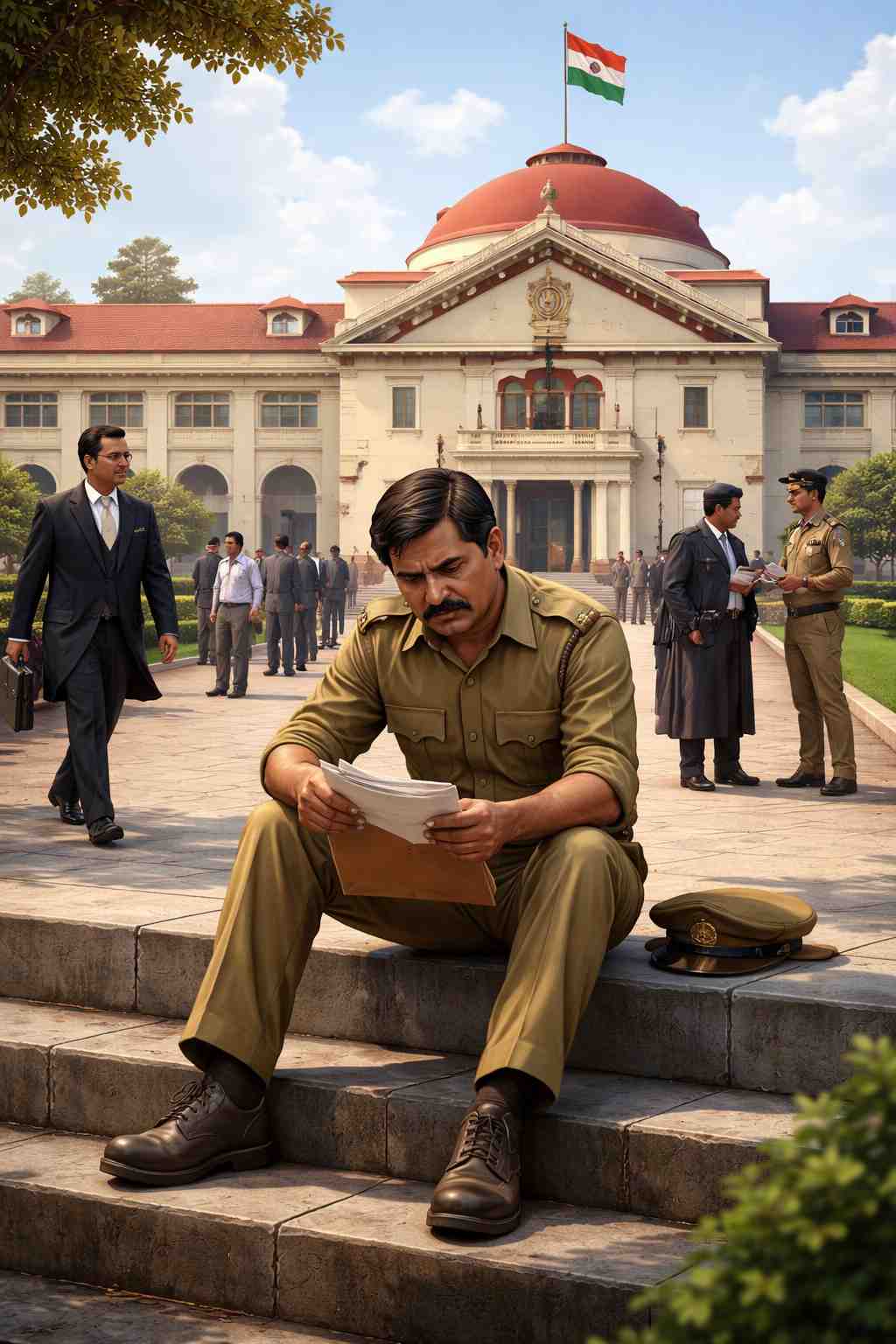
The Patna High Court, in Civil Writ Jurisdiction Case No. 10518 of 2018, decided on 21 November 2022, examined whether a person dismissed from service two decades earlier could seek reinstatement after such an inordinate delay. The petitioner, who had been appointed as a Constable in 1997 under “special circumstances,” was dismissed in 2002 because his appointment had not followed the proper recruitment procedure.
For sixteen years, he took no legal action. Then, in 2013, he filed a representation before the Home Department, Bihar, asking to be reinstated, arguing that other similarly placed employees had been granted relief by the High Court. When his claim was rejected by a communication dated 31 March 2016, he filed this writ petition in 2018 before the Patna High Court.
The Court examined whether such a delayed challenge could be entertained and whether the rejection of his representation created a new cause of action.
The petitioner’s main contention was that under Clause 4.C(1) of the Bihar State Litigation Policy, 2011, his case qualified as a “covered matter.” He relied on several earlier High Court judgments where constables similarly appointed without formal process were reinstated. He claimed the government should have extended the same benefit to him.
However, the State argued that the petitioner’s case was hopelessly delayed. His dismissal order was passed in 2002, but he approached the Court only in 2018. The rejection of his representation in 2016, they said, could not revive or restart the limitation period. The State further pointed out that he never challenged the original dismissal order within a reasonable time.
Justice Madhuresh Prasad agreed with the State’s submissions. The Court noted that the petitioner’s dismissal in 2002 was a final administrative action, and the clock for limitation began from that date. His 2013 representation, filed after 11 years of silence, could not create a “fresh cause of action.” The Court relied on the Supreme Court’s judgment in Union of India & Others v. C. Girija & Others, (2019) 15 SCC 633, which held that a belated representation does not extend or renew limitation for challenging an old order.
The Court also noted that the petitioner had not even annexed a copy of his dismissal order dated 18 March 2002 to the writ petition. This omission meant that the Court lacked the necessary factual basis to consider the legality of the dismissal itself.
Given the extreme delay, lack of fresh cause of action, and insufficient pleadings, the Patna High Court dismissed the writ petition. The Court emphasized that prolonged inaction on the part of a litigant cannot be excused merely by filing a late representation or citing the State Litigation Policy.
Significance or Implication of the Judgment
This judgment is an important reaffirmation of the principle that courts will not entertain stale claims, especially in service matters. It underscores that once an order of dismissal or termination becomes final, a government employee cannot revive their claim after many years by simply filing a representation.
For public servants and contractual workers in Bihar, this case serves as a cautionary precedent: if one wishes to challenge an administrative decision like dismissal or non-regularization, it must be done promptly and with proper documentation. The decision also clarifies that the Bihar State Litigation Policy, 2011 does not create new rights—it only guides the State to avoid unnecessary litigation in cases already covered by settled law.
For the government, this judgment provides support against reopening old employment cases. It reinforces the need for finality in administrative decisions and discourages employees from seeking relief after decades of delay.
Legal Issue(s) Decided and the Court’s Decision
- Whether a dismissed employee can seek reinstatement after 16 years by filing a delayed representation?
→ No. The Court held that such a delayed claim is barred by laches. A belated representation does not give rise to a fresh cause of action. - Whether rejection of representation under Bihar State Litigation Policy, 2011, creates a new cause of action?
→ No. The Court ruled that rejection of a representation does not revive limitation or reopen old matters. - Whether the petitioner’s case qualifies as a “covered matter” under Clause 4.C(1) of the Bihar State Litigation Policy, 2011?
→ No. The Court found that since the dismissal order was never challenged in time, the petitioner could not seek benefit under the policy. - Outcome:
→ The writ petition was dismissed due to delay, laches, and lack of necessary pleadings.
Judgments Referred by Parties
- LPA No. 1746 of 2010 — Deepak Kumar v. State of Bihar & Others (2011)
- LPA No. 1167 of 2009 — State of Bihar & Others v. Md. Manzoor Alam (08.08.2011)
- CWJC No. 3799 of 2006 — Satish Chandra Jha v. State of Bihar & Others (23.07.2012)
- LPA No. 690 of 2006 — Mithilesh Kumar Singh v. State of Bihar & Others (23.05.2007)
- LPA No. 1584 of 2017 — Umesh Kumar Verma & Another v. State of Bihar & Others (31.01.2018)
Judgments Relied Upon or Cited by Court
- Union of India & Others v. C. Girija & Others, (2019) 15 SCC 633
Case Title
Dinesh Prasad Yadav v. The State of Bihar & Others
Case Number
Civil Writ Jurisdiction Case No. 10518 of 2018
Citation(s)
2023 (1) PLJR 504
Coram and Names of Judges
Hon’ble Mr. Justice Madhuresh Prasad
Names of Advocates and who they appeared for
- For the Petitioner: Mr. Ajay Kumar, Advocate
- For the Respondents: Mr. Sheo Shankar Prasad, Standing Counsel VIII
Link to Judgment
MTUjMTA1MTgjMjAxOCMxI04=-wgOLd–am1–SmgSE=
If you found this explanation helpful and wish to stay informed about how legal developments may affect your rights in Bihar, you may consider following Samvida Law Associates for more updates.







