
Simplified Explanation of the Judgment
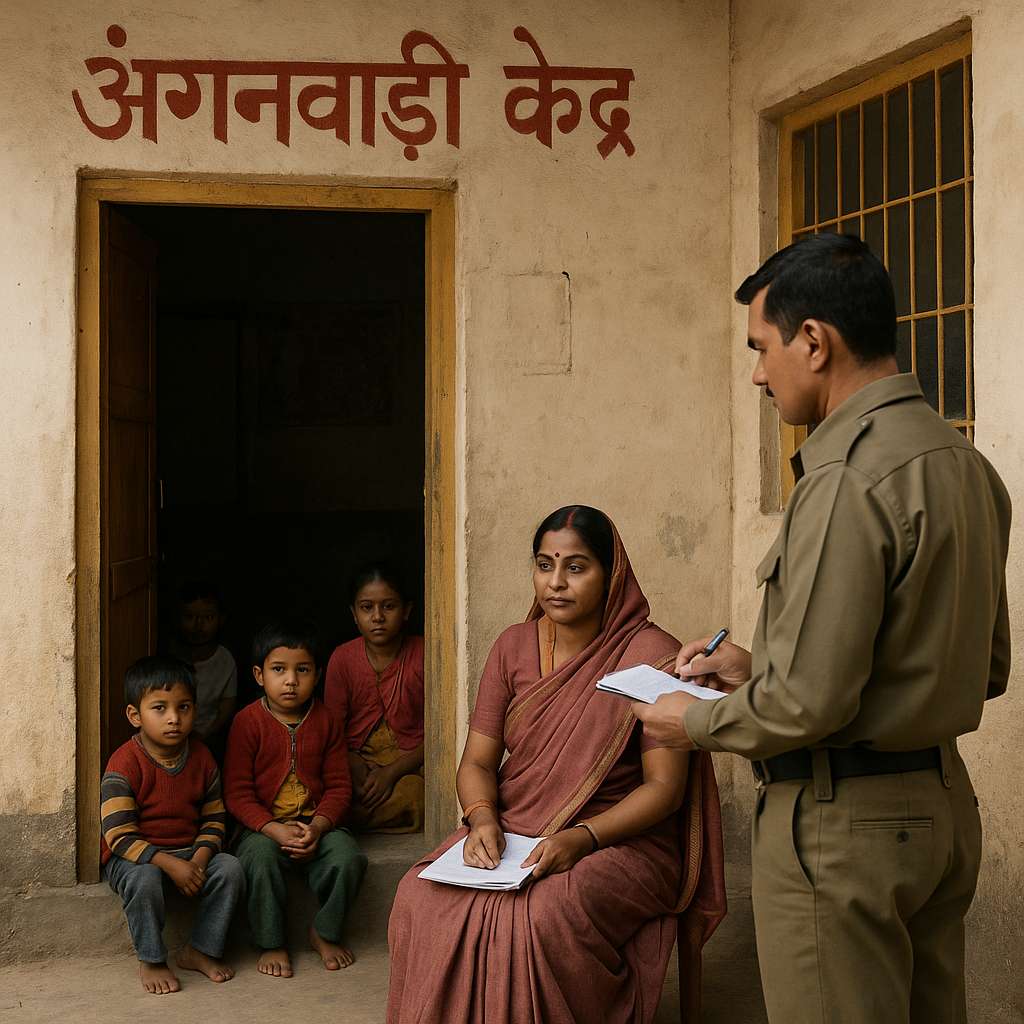
The Patna High Court, in its judgment dated 2 January 2023, dealt with the wrongful termination of an Anganwadi Sevika who had been removed from service without a formal inquiry. The Court ruled that the removal was illegal because the authorities failed to give her a fair hearing before taking action.
This case arose from an appeal (Letters Patent Appeal No. 905 of 2019) filed by the petitioner, who had been working as an Anganwadi Sevika since 2003. She challenged her removal order issued in December 2014 and the subsequent dismissal of her writ petition by a Single Judge in July 2019.
Background
The petitioner was accused of irregularities in maintaining attendance registers and inconsistencies in the number of children attending the Anganwadi centre. These findings were based on an inspection conducted by the District Magistrate, Kishanganj, on 10 December 2014. Relying on this inspection report, the District Programme Officer issued a show-cause notice to the petitioner, took her written explanation, and then removed her from service on 29 December 2014.
However, the High Court observed that though allegations were serious, the authorities never considered the petitioner’s explanation properly. Moreover, since the allegations were factual and disputed, the law required that a formal departmental inquiry be conducted — including examination of witnesses — before removing her.
The Division Bench referred to the Supreme Court’s judgment in Roop Singh Negi v. Punjab National Bank (2009) 2 SCC 570, where it was held that disciplinary proceedings must be based on evidence recorded in the presence of the charged employee. The Bench also relied on Esteem Properties Pvt. Ltd. v. Chetan Kamble (2022 SCC OnLine SC 246), where the Supreme Court reiterated that even in administrative or quasi-judicial actions, the affected party must be given a fair opportunity of hearing.
Key Findings
The High Court emphasized that even if no specific service rules existed for Anganwadi workers, basic principles of natural justice must still be followed. When an employee faces serious allegations that could result in loss of livelihood, authorities are duty-bound to hold a proper inquiry before passing a removal order. The Bench found that neither the District Programme Officer nor the learned Single Judge had appreciated this principle correctly.
Decision and Directions
The Division Bench (comprising Hon’ble Mr. Justice P. B. Bajanthri and Hon’ble Mr. Justice Arun Kumar Jha) allowed the appeal. It set aside the Single Judge’s order dated 12 July 2019 and the removal orders dated 03 April 2017 and 29 December 2014.
The Court directed that:
- The petitioner be reinstated within two weeks from the date of receipt of the order.
- She be paid all monetary benefits for the intervening period from 3 April 2017 till reinstatement.
- The authorities are free to initiate a fresh inquiry, but only after giving her full opportunity to defend herself, and must complete it within six months.
Significance or Implication of the Judgment
- For government departments: The judgment reiterates that even contractual or honorary workers like Anganwadi Sevikas cannot be removed arbitrarily. Authorities must ensure due process, including issuance of notice, consideration of reply, and formal inquiry where facts are disputed.
- For Anganwadi and social welfare staff: It protects the livelihood rights of grassroots workers, confirming that they cannot be dismissed without being heard.
- For the judiciary: The ruling underscores the constitutional guarantee of fairness and the continuing relevance of audi alteram partem — the right to be heard — even in administrative matters.
- For public administration: It sends a strong reminder that adherence to principles of natural justice is not optional; failure to follow them renders disciplinary actions void.
Legal Issue(s) Decided and the Court’s Decision with Reasoning
- Whether an Anganwadi Sevika can be terminated without a formal inquiry when allegations are disputed?
– Decision: No. The Court held that when serious factual disputes exist, an inquiry with witness examination is mandatory. - Whether natural justice applies in absence of specific disciplinary rules for Anganwadi workers?
– Decision: Yes. Even if no formal regulations exist, authorities must still provide an opportunity of hearing. - Can the Court direct reinstatement with monetary benefits?
– Decision: Yes. Since the removal was procedurally flawed, reinstatement and payment of arrears were justified.
Judgments Referred by Parties
- Roop Singh Negi v. Punjab National Bank, (2009) 2 SCC 570.
- Esteem Properties Pvt. Ltd. v. Chetan Kamble, 2022 SCC OnLine SC 246.
Judgments Relied Upon or Cited by Court
- Same as above.
Case Title
Mehin Nigar Begum v. The State of Bihar & Ors.
Case Number
Letters Patent Appeal No. 905 of 2019
(arising out of CWJC No. 10485 of 2017)
Citation(s)
2023 (1) PLJR 323
Coram and Names of Judges
Hon’ble Mr. Justice P. B. Bajanthri
Hon’ble Mr. Justice Arun Kumar Jha
Names of Advocates and who they appeared for
• For the appellant: Mr. Ajey Kumar, Advocate.
• For the respondents: Mr. Gyan Prakash Ojha (GA-7).
Link to Judgment
MyM5MDUjMjAxOSMxI04=-6ZxNzmWfDIM=
If you found this explanation helpful and wish to stay informed about how legal developments may affect your rights in Bihar, you may consider following Samvida Law Associates for more updates.







