
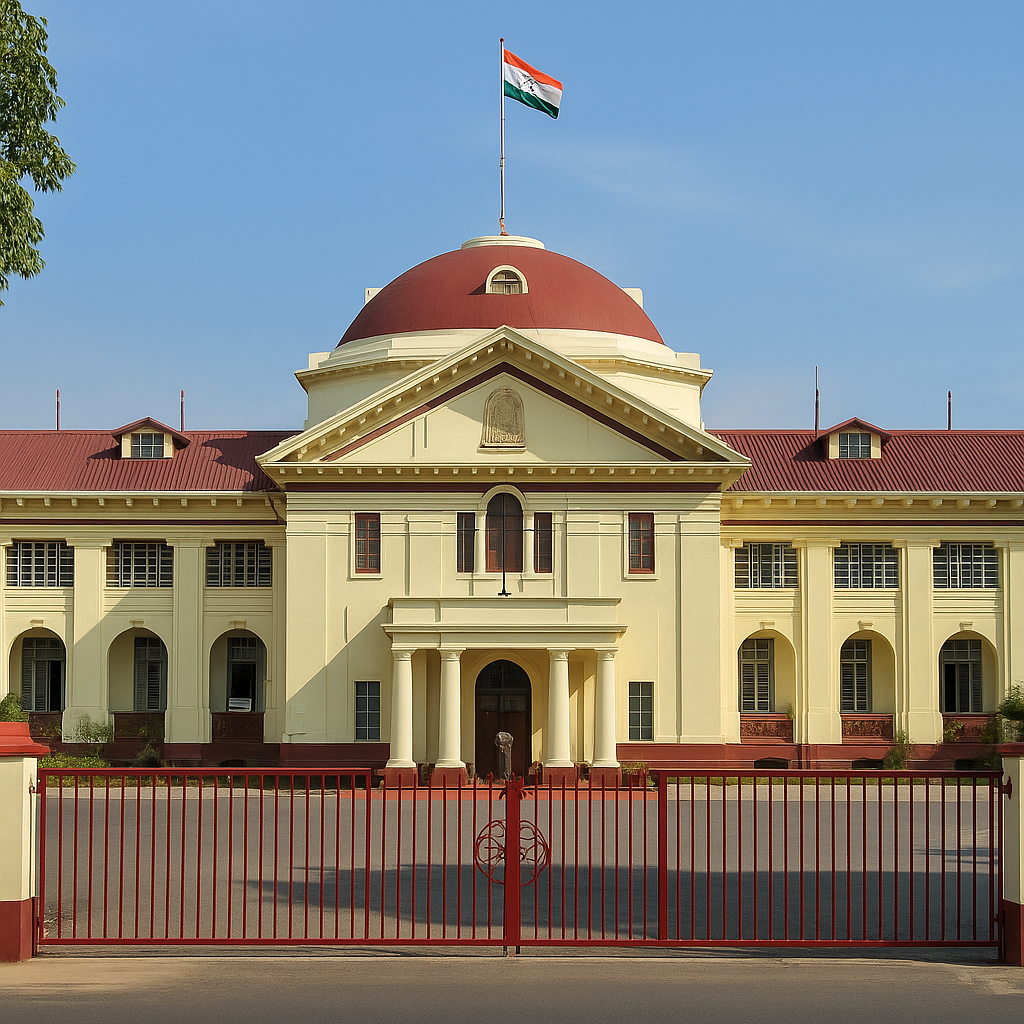
The Patna High Court has clarified how taxpayers in Bihar can use the Central Board of Indirect Taxes and Customs (CBIC) special appeal window to overcome delays in filing first appeals under the Bihar Goods and Services Tax Act, 2017 (BGST Act). In this writ petition, the petitioner’s appeal had earlier been dismissed by the first appellate authority as time-barred beyond the condonable period prescribed by Section 107(4) of the BGST Act. The High Court examined CBIC’s Notification No. 53/2023–Central Tax dated 02.11.2023, noted its special procedure, and restored the petitioner’s appeal to the appellate authority subject to strict compliance with the notification’s pre-conditions by 31.01.2024.
Simplified Explanation of the Judgment
Under Section 107 of the BGST Act, an appeal to the first appellate authority must ordinarily be filed within three months from the date of the order. The law permits a limited extension of one additional month if the appellant shows sufficient cause; beyond this combined period, neither the appellate authority nor the High Court exercising writ jurisdiction can condone further delay. This baseline legal position was reiterated by the Court. In the present case, the petitioner’s appeal had been filed even after the one-month grace period, and therefore the appellate authority had dismissed it on limitation.
While that legal position is firm, the Court took note of an intervening development: CBIC’s Notification No. 53/2023–Central Tax dated 02.11.2023 (S.O. 4767(E)). The Court recorded that this notification created a special, time-bound window for filing or treating as properly filed certain appeals under Sections 73 and 74 (demand and recovery provisions) of the GST law. Specifically, if an order under Sections 73 or 74 was passed by the “proper officer” on or before 31.03.2023, an appeal could be filed on or before 31.01.2024 in FORM GST APL-01. This special window effectively extends the outer limit beyond the usual one-month condonable period under Section 107(4), but only if the appellant satisfies the notification’s conditions.
The notification’s key pre-conditions (paragraph 3) are financial in nature:
- The appellant must first pay all admitted amounts of tax, interest, fine, fee, and penalty arising from the impugned order; and
- The appellant must also pay 12.5% of the remaining disputed tax, subject to a cap of ₹25 crore, with at least 20% of that 12.5% being paid through the Electronic Cash Ledger.
Further, paragraph 4 places a moratorium on refunds triggered “on account of this notification” until the disposal of the appeal. Paragraph 5 clarifies that appeals for demands not involving tax are not admissible under this special route, and paragraph 6 applies Chapter XIII of the CGST Rules to such appeals.
Against that background, the High Court reasoned that since the petitioner’s appeal had been thrown out solely for being beyond the condonable period, the notification offered a statutory route to revive appellate scrutiny—provided the petitioner complied fully and in time. The Court therefore set aside the order dismissing the appeal on limitation and restored the appeal to the file of the appellate authority, but only on the strict condition that the petitioner meets the payment requirements under paragraph 3 of the notification before 31.01.2024. If those conditions are met in time, the appellate authority must take up the appeal and decide it on merits. If they are not met, the appeal “ought to be rejected or would stand rejected.”
The Court also clarified how the percentage computations interact with the ordinary pre-deposit rules: on filing an appeal under Section 107, 10% of the disputed tax is ordinarily required. With the notification, the appellant may now be required to make up any deficiency so that the total 12.5% of disputed tax condition is satisfied in the manner specified (including the “at least 20% via cash ledger” component). In other words, if an appellant had already paid 10% as a normal pre-deposit, the appellant may now need to top up the additional 2.5% (and ensure the mandated cash component) to fall within the notification’s umbrella. The Court used the expression “deficient amount” to capture this top-up requirement.
Importantly, the Bench added a systemic clarification: even in other cases where similar writ petitions were rejected by the High Court because the appeals were time-barred beyond Section 107(4), the assessees may still invoke this notification’s remedy independently of (“de hors”) the prior court orders, as long as they satisfy the notification conditions within time. To operationalize this across the tax administration in Bihar, the Court directed the Commissioner, State Taxes, Government of Bihar to issue necessary instructions to field officers to consider restoration and hearing of such appeals strictly in accordance with the notification.
In sum, the High Court has not diluted the statutory limits on condonation of delay under Section 107. Rather, it has recognized and given effect to a parallel legislative/administrative window—the CBIC notification—that temporarily expands appellate access for a specified class of GST demands (Sections 73/74 orders up to 31.03.2023), subject to time-bound compliance by 31.01.2024 and strict pre-deposit conditions. For taxpayers, this means that appeals dismissed as time-barred may now be revived—but only if the notification fits their facts and they promptly meet the payment and filing requirements.
Significance or Implication of the Judgment (For general public or government)
- For taxpayers: It opens a practical route to obtain merits-based appellate review of old Section 73/74 orders that otherwise stood foreclosed by delay. However, the relief is conditional and time-bound. Taxpayers must quickly assess eligibility (date of order, nature of demand) and arrange funds to meet the 12.5% disputed tax requirement (with the mandated cash portion).
- For administration: It ensures uniform treatment of similarly situated assessees. By directing the Commissioner to issue instructions, the Court aims to prevent inconsistent decisions across circles and divisions, thereby improving administrative certainty.
- For appellate fora: Appellate authorities will likely see a wave of restorations or fresh appeals within the notification’s scope. They must verify compliance with the exact conditions before admitting the appeal and then proceed on merits.
Legal Issue(s) Decided and the Court’s Decision with reasoning
- Whether a time-barred GST appeal (beyond Section 107(4)’s one-month condonable period) can be entertained.
Decision: Generally, no—neither the appellate authority nor the High Court can condone delay beyond the statutory limit. However, CBIC’s Notification No. 53/2023 creates a special route for certain orders under Sections 73/74, extending time up to 31.01.2024, subject to strict pre-conditions. The Court gave effect to this special scheme. - Whether the dismissed appeal should be restored.
Decision: Yes, but conditionally. The dismissal order was set aside; the appeal is to be restored if (and only if) the appellant pays all admitted dues and 12.5% of disputed tax (with at least 20% of that 12.5% from the Electronic Cash Ledger) before 31.01.2024. Otherwise, the appeal stands rejected. - Whether similarly situated assessees may rely on the notification despite earlier High Court rejections on limitation.
Decision: Yes. The Court expressly stated that assessees whose writ petitions were rejected due to delay beyond Section 107(4) can nevertheless invoke the notification and seek restoration, subject to compliance. The Commissioner was directed to issue necessary instructions to ensure this is implemented.
Case Title
M/s Rajesh Bhandar, (2019-2020) Vs. The State of Bihar
Case Number
Civil Writ Jurisdiction Case (CWJC) No. 9136 of 2023.
Coram and Names of Judges
- Hon’ble the Chief Justice (K. Vinod Chandran, CJ)
- Hon’ble Mr. Justice Rajiv Roy.
Names of Advocates and who they appeared for
- For the petitioner: Mr. Manish Kumar, Advocate.
- For the State/Respondents: Mr. Vivek Prasad, GP-7; assisted by Mr. Sanjay Kumar, A.C. to GP-7; Ms. Roona, A.C. to GP-7; Ms. Manisha Singh, A.C. to GP-7; Ms. Supragya, A.C. to GP-7.
Link to Judgment
MTUjOTEzNiMyMDIzIzEjTg==-vIOi1o–am1–ucog=
If you found this explanation helpful and wish to stay informed about how legal developments may affect your rights in Bihar, you may consider following Samvida Law Associates for more updates.







