
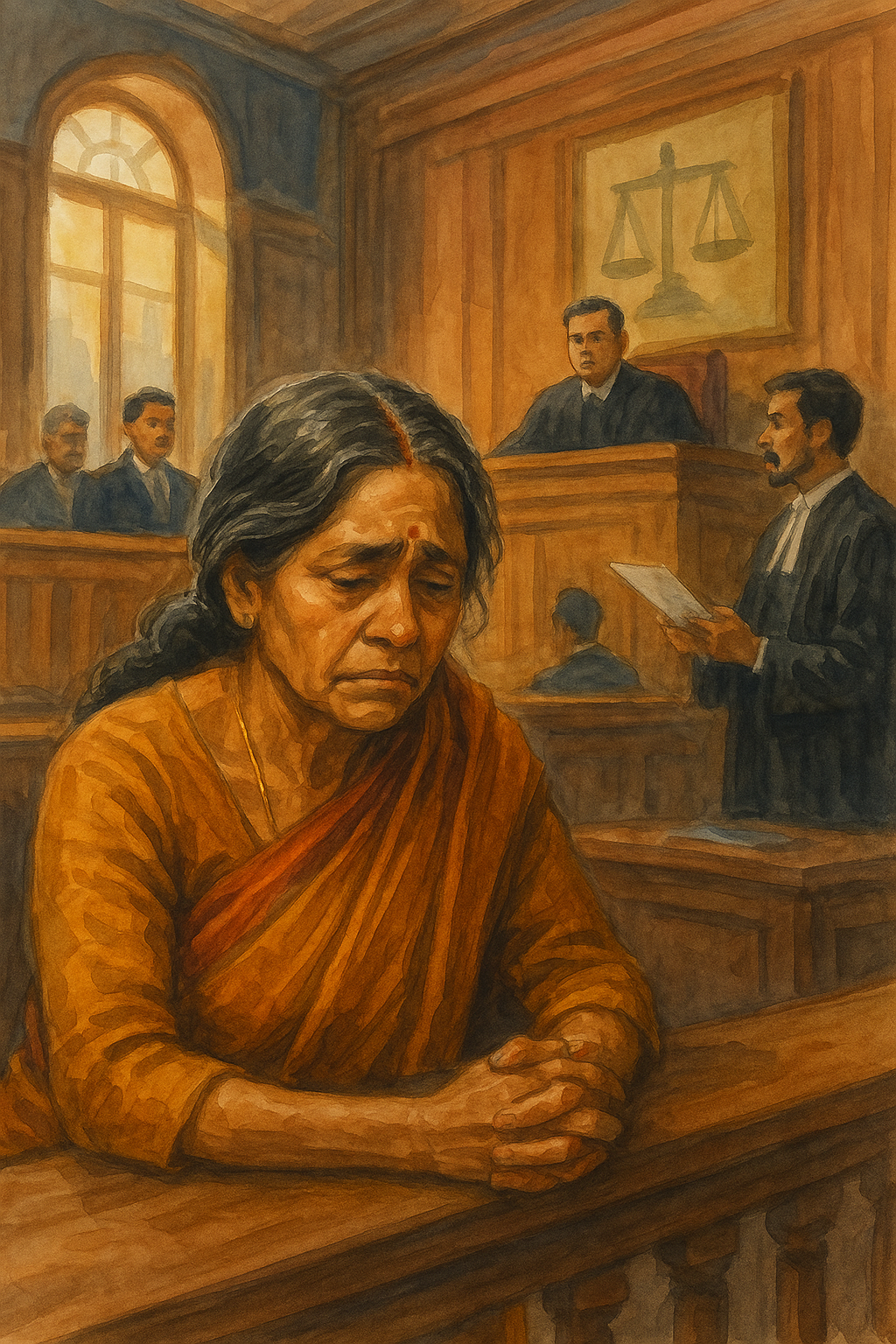
The Patna High Court has set aside a 2012 order that sought to deduct ₹3,01,463.63 from the post-retirement dues of a deceased government employee, directing the State to release the full gratuity and leave encashment to the widow with applicable interest within two weeks of receipt of the court order. The Court held that pension and allied benefits are not a bounty, and recovery cannot be fastened upon a widow in the absence of due process or a sustaining legal provision.
In this case, the aggrieved person—the widow of a deceased employee of the Directorate of Economics & Statistics, Government of Bihar—challenged an order dated 17.02.2012 issued by the department (through its Joint Director-Administration) directing that a “missing cash chest” amount of ₹3,01,463.63 be adjusted against the deceased employee’s post-service entitlements. The High Court recorded that the first cash inventory was drawn on 04.09.2003 when the employee—then terminally ill with cancer—was not present; nor was any family member present or noticed. The employee subsequently died in harness on 19.09.2003. A three-member committee later opined that the deceased was not solely responsible for the shortage, and even departmental proceedings against other officers resulted in certain findings and a censure to one of them. Despite these materials, the department ordered recovery from the deceased employee’s gratuity and leave encashment alone—triggering this writ petition.
The State opposed the petition primarily on delay and laches, pointing out that the 2012 order was challenged only in 2023. The Court rejected this objection, relying on settled principles that pension and post-retiral dues are a continuing right and not barred by limitation merely due to delay, particularly when the beneficiary is a widow claiming family entitlements.
On merits, the Court emphasized multiple infirmities: (i) the initial inventory was conducted without the participation of the employee or his family; (ii) the three-member committee found more than one person responsible for the shortage; (iii) there was no material showing that any show-cause notice or hearing was afforded to the widow prior to passing the adverse order in 2012; and (iv) the proposed recovery targeted pensionary heads—gratuity and leave encashment—contrary to governing principles and precedent requiring strict statutory backing (including compliance with Rule 43(b) of the Bihar Pension Rules) before any withholding or recovery from pensionary benefits.
Quantitatively, the department had computed gratuity at ₹2,77,704 and leave encashment at ₹60,648, totaling ₹3,38,352, and proposed to adjust ₹3,01,463.63 from this figure. The Court found such adjustment impermissible, set aside the recovery order, and directed the release of the full amounts with interest “forthwith,” to be completed within two weeks of receiving the order.
Significance or Implication of the Judgment (For general public or government)
This judgment reinforces four important principles that matter to families of deceased government employees and to departments administering pensionary claims:
- Pensionary benefits are a legal right, not charity: Courts treat gratuity, pension and leave encashment as earned rights that cannot be withheld or reduced except under clear statutory authority and after due process. This ruling reiterates that “pension is not a bounty” and that leave encashment partakes the character of salary.
- No recovery from a widow without due process: The State cannot shift an alleged shortage or defalcation to a widow unless a proper proceeding was initiated and concluded against the employee in his lifetime, or unless a specific rule permits it. Proceedings generally abate with the death of the employee; personal defences cannot be tried against a surviving family member.
- Delay and laches do not defeat continuing pension rights: Even if a widow moves the Court years later, courts recognize pension and family pension as continuing rights. Administrative objections based solely on delay may not succeed where the entitlement persists.
- Procedural fairness is mandatory: Inventories or inquiries affecting financial liability should involve the concerned employee or, upon death, at least provide notice to the family before adverse orders are issued. Absence of a show-cause notice or hearing undermines the legality of recovery.
For departments, the decision is a reminder to (a) document shortages with transparent procedures, (b) involve all possibly responsible officers, and (c) avoid unilateral recovery from pensionary heads without a Rule 43(b) order or equivalent legal footing. For citizens, it signals that wrongful withholding of family pension, gratuity or leave encashment can be challenged successfully.
Legal Issue(s) Decided and the Court’s Decision with reasoning
- Whether a 2012 recovery order adjusting ₹3,01,463.63 from the deceased employee’s gratuity and leave encashment could be sustained in 2023 despite delay and laches
• Decision: Yes, the writ is maintainable. Pensionary benefits are a continuing right; limitation principles do not bar such claims merely due to delay. - Whether recovery could be effected from pensionary heads (gratuity/leave encashment) of a deceased employee’s widow in the absence of due process and specific statutory authority
• Decision: No. Recovery from pensionary dues requires strict compliance with law (including Rule 43(b) where applicable); absent such compliance, withholding is illegal. - Whether the inquiry and inventory process, conducted without the employee/family and followed by an order without notice to the widow, could justify recovery
• Decision: No. The inventory/inquiry was procedurally deficient; moreover, a committee itself indicated that the deceased was not solely responsible, and another officer was censured. Recovery targeted only the deceased’s dues without affording the widow any hearing—impermissible. - Appropriate relief
• Decision: The recovery order dated 17.02.2012 (Annexure P/7) was quashed; the State was directed to release full gratuity and leave encashment with applicable interest within two weeks of receipt of the order.
Judgments Referred by Parties
- Kaushlya Devi v. State of Bihar & Ors., CWJC No. 9735 of 2021 (Patna High Court) — on pension being a continuing right and not defeated by delay/laches.
- Mostt. Punita Karn v. State of Bihar & Ors., CWJC No. 270 of 2020 (Patna High Court) — on impermissibility of recovery from a widow’s death-cum-retiral benefits absent legal authority and proceedings.
Judgments Relied Upon or Cited by Court
- Kaushlya Devi v. State of Bihar & Ors., CWJC No. 9735 of 2021 (Patna High Court) — delay and laches do not bar pensionary claims; pension is not a bounty.
- Mostt. Punita Karn v. State of Bihar & Ors., CWJC No. 270 of 2020 (Patna High Court) — recovery from widow’s benefits is unfair and unsustainable without rule-based authority.
- Pradip Kumar Srivastava v. State of Bihar & Ors., CWJC No. 4760 of 2020 (Patna High Court) — leave encashment is akin to salary; pension/gratuity cannot be withheld without a valid Rule 43(b) order.
Case Title
Geeta Srivastava Vs. The State of Bihar
Case Number
Civil Writ Jurisdiction Case No. 10715 of 2023.
Citation(s)
2025 (2) PLJR 223
Coram and Names of Judges
Hon’ble Mr. Justice Arvind Singh Chandel. (Judgment dated 04.03.2025; uploading date noted as 07.03.2025.)
Names of Advocates and who they appeared for
- For the petitioner (widow): Mr. Dhananjay Kumar, Advocate.
- For the State: Mr. Vinay Kirti Singh, Government Advocate-2.
Link to Judgment
MTUjMTA3MTUjMjAyMyMxI04=-FL–ak1–Sg2ZNvC4=
If you found this explanation helpful and wish to stay informed about how legal developments may affect your rights in Bihar, you may consider following Samvida Law Associates for more updates.







