
Simplified Explanation of the Judgment
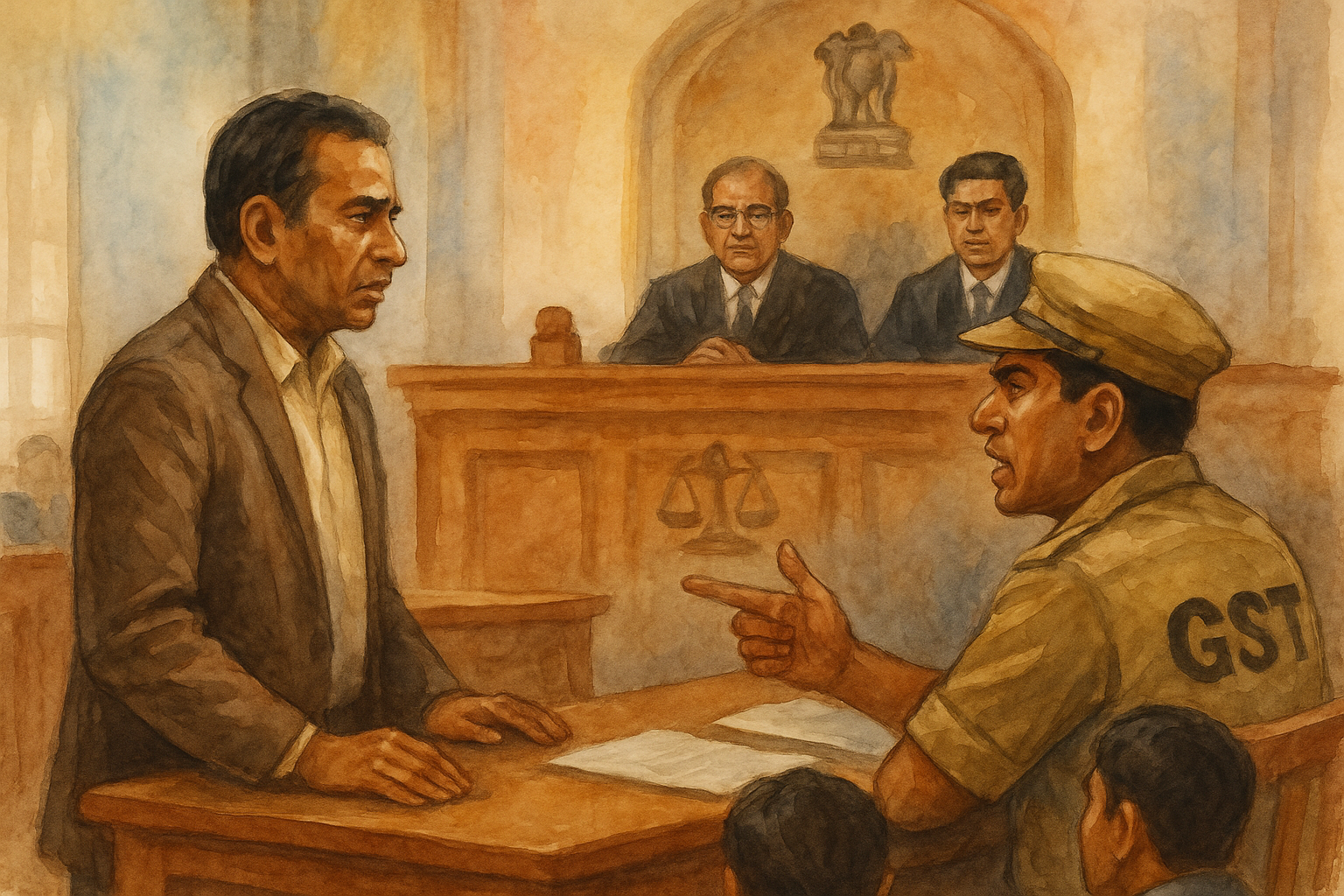
In a recent decision, the Patna High Court addressed an important issue concerning the cancellation of GST registration without proper notice and hearing. The petitioner, a sole proprietor engaged in the retail sale of medicines, had their GST registration cancelled by the tax authorities on the grounds of failure to file returns for a continuous period. The cancellation order and the preceding show-cause notice were challenged before the court on the grounds of procedural lapses and violation of the principles of natural justice.
The facts unfolded as follows: The petitioner, registered under the Goods and Services Tax (GST) Act since July 2017, failed to file returns for several months in 2023. Consequently, the department issued a show-cause notice dated 13.11.2023, which was only uploaded on the GST portal. Since there was no response from the petitioner, the registration was cancelled via a non-speaking order dated 15.12.2023, with the effective date of cancellation being backdated to the date of the show-cause notice.
The petitioner contended that they had not received the notice through any mode other than the portal and therefore were unaware of the proceedings. Moreover, the notice asked for a reply within 30 days of its service, yet also summoned the petitioner for a personal hearing before the expiry of those 30 days. Further, the cancellation order lacked reasons and did not reflect any consideration of the available records, as required by law.
The High Court took serious note of these deficiencies. It emphasized that cancellation of registration under the GST regime carries civil consequences and affects the right to carry on business under Article 19(1)(g) of the Constitution. Therefore, adequate notice and opportunity to respond must be provided. The Court found that mere uploading of the notice on the portal was insufficient, especially when it involved taking away a statutory right. It also observed that the cancellation order was devoid of reasoning and failed to even mention the petitioner’s failure to respond.
Referring to previous judgments, including that of the Supreme Court in Kranti Associates Pvt. Ltd. v. Masood Ahmed Khan (2010) 9 SCC 496, the Court reiterated the necessity of speaking orders in quasi-judicial proceedings. The decision also cited Godrej Sara Lee Ltd. v. Excise and Taxation Officer (2023 SCC OnLine SC 95), which permits bypassing appellate remedies in cases of natural justice violations.
In light of these findings, the Court quashed the show-cause notice and cancellation order, restored the petitioner’s GST registration, and directed the department to accept late returns within three months.
Significance or Implication of the Judgment
This judgment reinforces the fundamental principle that government authorities must follow due process before taking punitive action. Particularly in the GST regime, where cancellation of registration can severely impact business operations, the judgment protects the rights of small business owners and ensures procedural fairness.
It sets a clear precedent that merely uploading notices on a digital portal is not sufficient compliance when civil consequences are involved. Authorities must adopt multiple modes of communication and provide a meaningful opportunity to respond. It also empowers affected parties to directly approach High Courts when the principles of natural justice are clearly violated.
For government bodies, the judgment serves as a reminder to issue reasoned and well-documented orders in all quasi-judicial proceedings. For taxpayers, it confirms that procedural defects can form valid grounds to challenge cancellation of GST registration.
Legal Issue(s) Decided and the Court’s Decision with reasoning
- Whether mere uploading of a show-cause notice on the GST portal is sufficient notice?
- No. The Court held that this is insufficient when the notice leads to serious civil consequences like cancellation of registration. Multiple modes of service are required.
- Was the cancellation order a non-speaking order and violative of natural justice?
- Yes. The cancellation order lacked reasons and failed to refer to any evidence or reply. It did not even record that the petitioner failed to respond.
- Can writ jurisdiction be invoked without exhausting appeal under Section 107 of the CGST Act?
- Yes. In cases of breach of natural justice, the Court can exercise writ jurisdiction directly, without insisting on statutory appeal.
- Should the registration be restored and returns be accepted?
- Yes. The Court restored the registration and directed acceptance of belated returns within three months.
Judgments Referred by Parties (with citations)
- Godrej Sara Lee Ltd. v. Excise and Taxation Officer-cum-Assessing Authority & Ors., 2023 SCC OnLine SC 95
- Rohit Enterprises v. The Commissioner and Ors., Bombay High Court (cited by petitioner)
- M/s. Kranti Associates Pvt. Ltd. & Anr. v. Masood Ahmed Khan & Ors., (2010) 9 SCC 496
Judgments Relied Upon or Cited by Court (with citations)
- M/s. Kranti Associates Pvt. Ltd. & Anr. v. Masood Ahmed Khan & Ors., (2010) 9 SCC 496
- Godrej Sara Lee Ltd. v. Excise and Taxation Officer-cum-Assessing Authority & Ors., 2023 SCC OnLine SC 95
Case Title
M/s Medicana v. Union of India & Ors.
Case Number
Civil Writ Jurisdiction Case No. 203 of 2025
Coram and Names of Judges
Hon’ble Mr. Justice P. B. Bajanthri
Hon’ble Mr. Justice S. B. Pd. Singh
Names of Advocates and who they appeared for
Mr. Bijay Kumar Gupta, Adv. (For the petitioner)
Mr. Manish Kumar, Adv. (For the petitioner)
Dr. K. N. Sinha, Sr. Adv., ASG (For the Union of India)
Mr. Anshuman Singh, Adv. (For the Union of India)
Mr. Vivek Prasad, GP 7 (For the State of Bihar)
Link to Judgment
a75f5303-1b25-4b95-a71d-d18ef9944d51.pdf
If you found this explanation helpful and wish to stay informed about how legal developments may affect your rights in Bihar, you may consider following Samvida Law Associates for more updates.







